When news broke overnight about China’s Moonshot AI unveiling its new model…

The market gapped down 1% before most traders even poured their morning coffee…
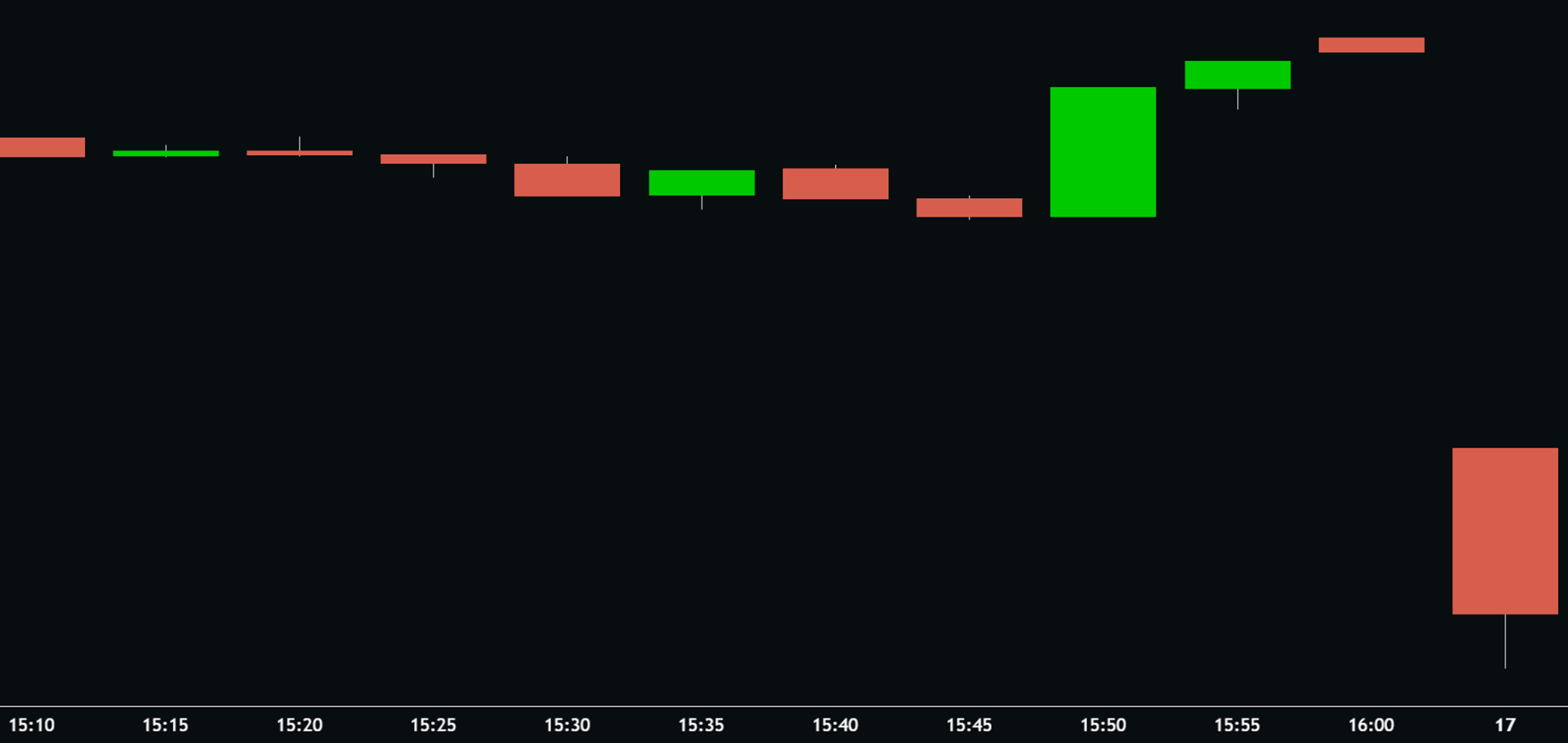
For standard portfolios, it looked like the start of another stressful day…
And over the next two hours, the market barely crawled higher… moving a tiny 0.2%…
To traditional buy-and-hold investors, a 0.2% move is practically useless…
Yet, according to our research, anyone who ignored the overnight headlines and waited until exactly 9:50 AM Eastern could have locked in a $529 payout before lunchtime… on a simple $1,000 starting stake…
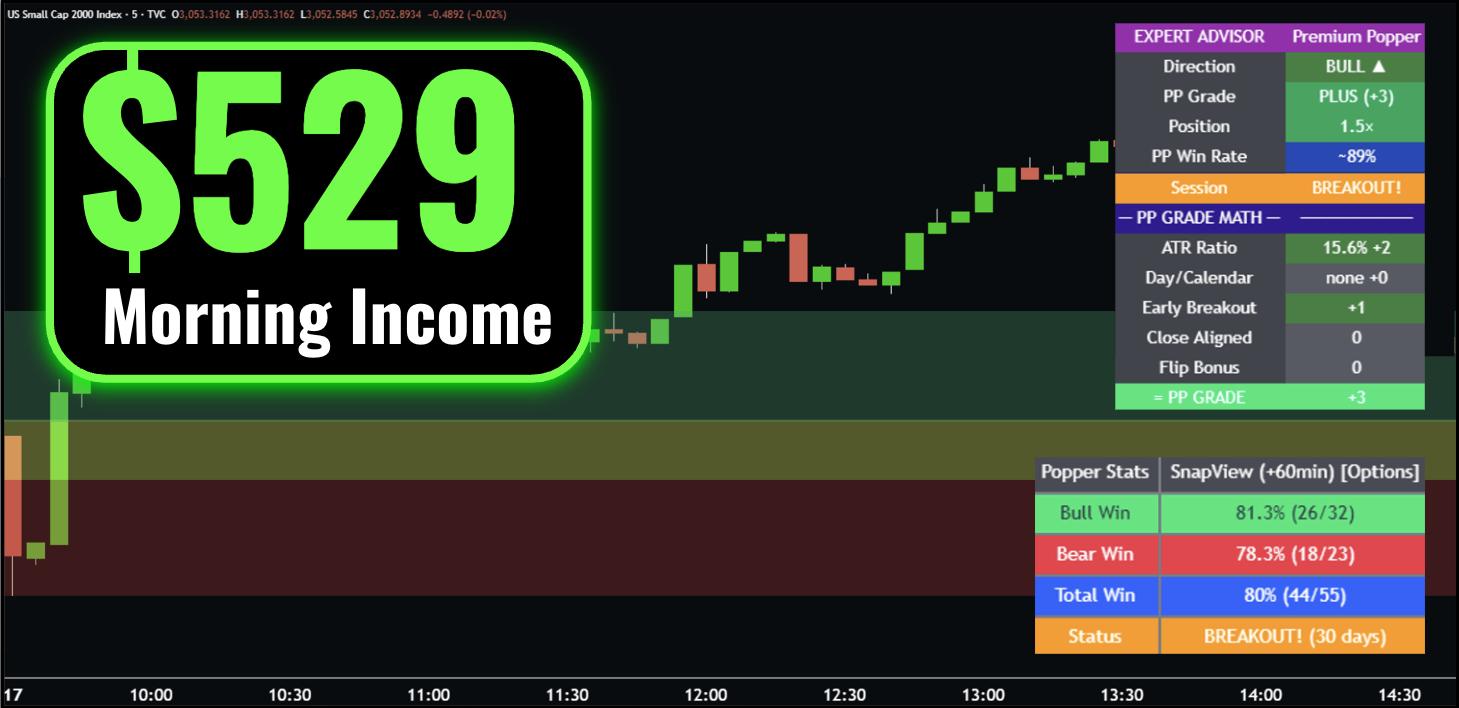
That would not have been an isolated fluke either…
Back on June 25th, when inflation surged past 4%…
And panicked investors expected a massive market beatdown… the market moved just 0.3% after the open… yet that exact same morning setup yielded another $526 payday before lunch…
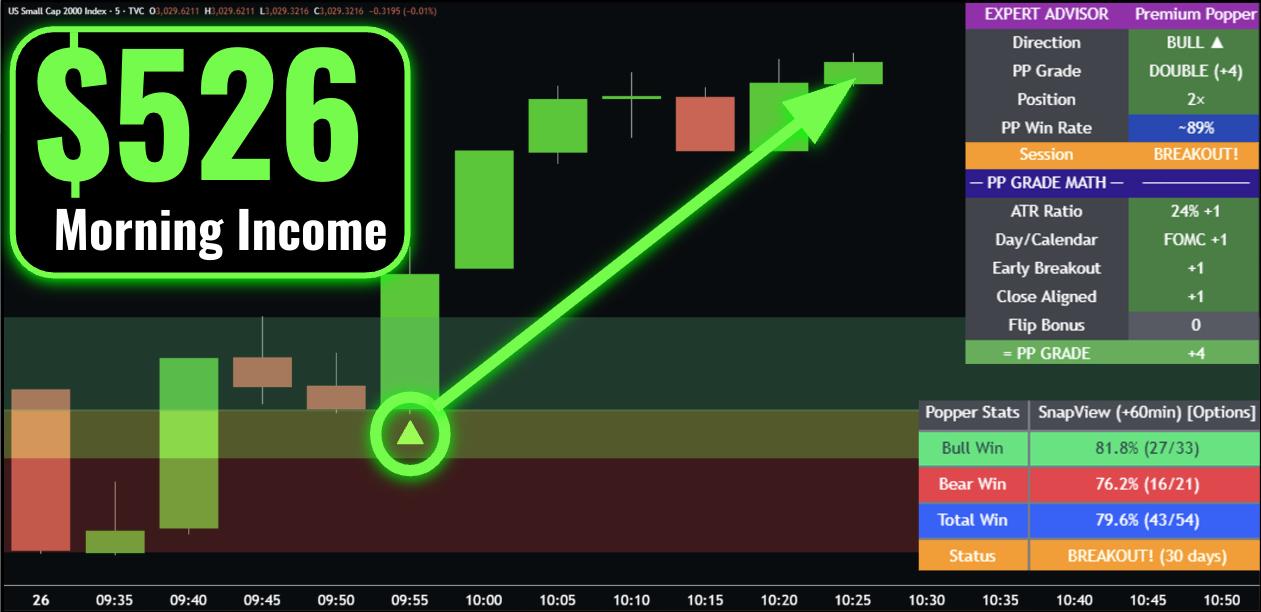
Of course, there would have been smaller gains and some that did not work out, but…
How would it have been possible to pull $500+ out of the market on a tiny fraction-of-a-percent crawl… while traditional traders are getting chopped to pieces?
It all comes down to an institutional phenomenon that happens during the first 20 minutes of every trading day…
Between 9:30 AM and 9:50 AM, Wall Street heavyweights enter a massive brawl to settle block orders… pushing nearly 25% of the entire day’s volume into a brief 20-minute window…
Right around 9:50 AM, the brawl ends… the dust settles… and the market literally hands us its direction for the rest of the morning…
By placing just one simple trade on one ticker right as that direction becomes clear…
You give yourself a shot to walk away with $500 in hand before lunch, leaving you completely free for the rest of your day…
While I cannot make any guarantees in the market…
Recently, I sat down live on camera with a former money manager to lay out the floor data behind this 9:50 AM morning phenomenon…
And how anyone with a normal brokerage account can take advantage of this step-by-step…
Tap here to watch the complete video breakdown before access is taken down.
See you there,
Silas Peters
Deere’s Nitrogen Edge Is a Software Problem
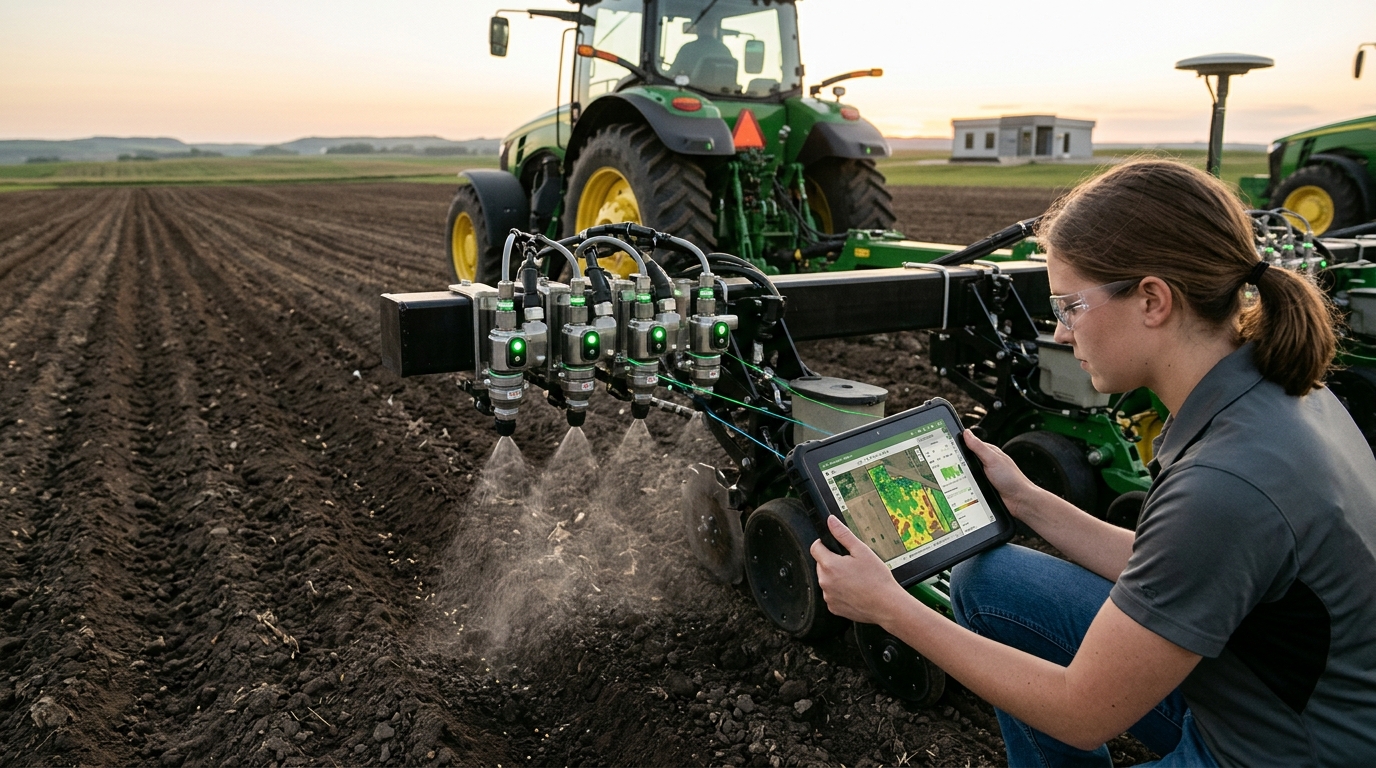
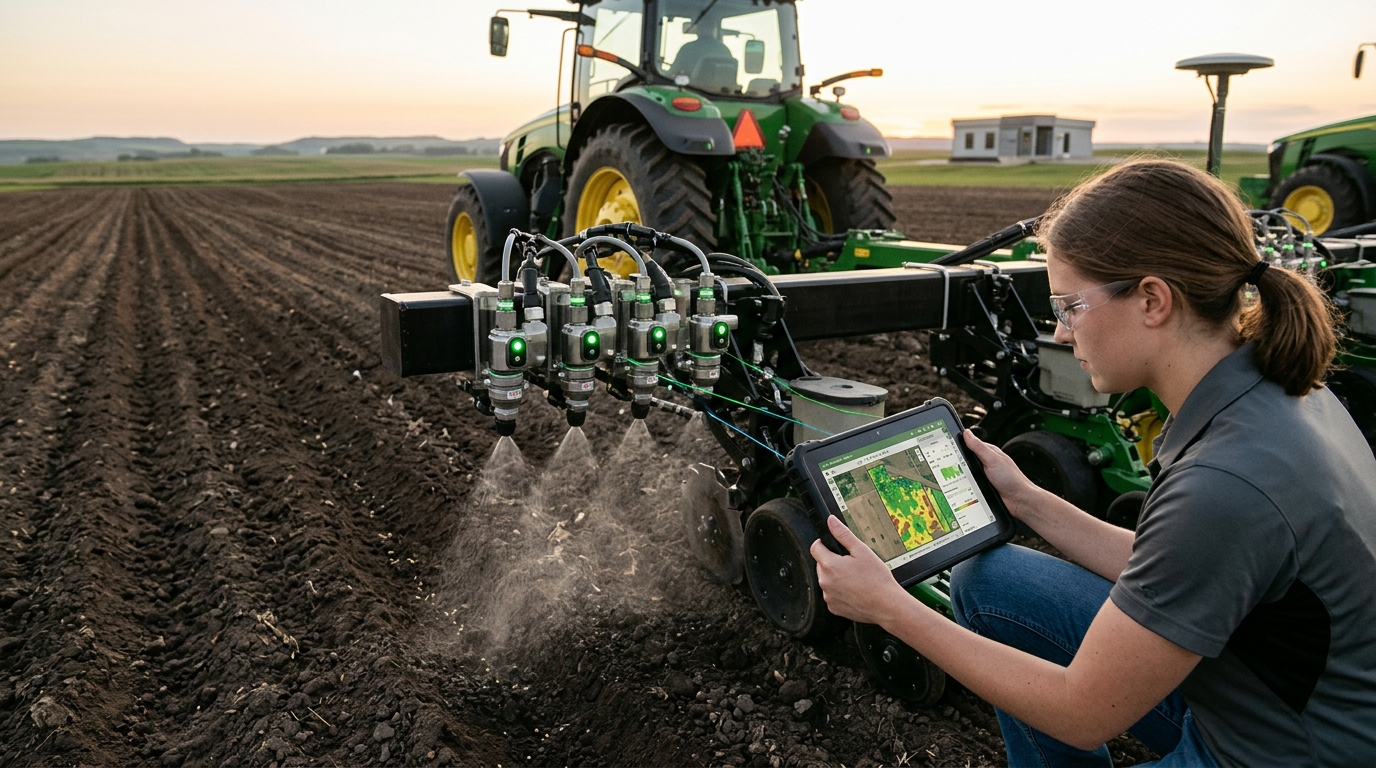
The conversation around John Deere’s precision agriculture push almost always lands on the hardware: seed-sensing nozzles, GPS-guided sprayers, attachment arrays that talk to the tractor’s ECU in real time. The technology is genuinely impressive. Blue River Technology, Deere’s California-based subsidiary, built ExactShot to detect each seed as it enters the soil and spray a few drops of starter fertilizer directly onto it rather than running a continuous stream down the row. Deere has said the system can cut starter fertilizer use by more than 60 percent and could save over 93 million gallons annually across the U.S. corn crop. JP Morgan analysts put that in dollar terms: ExactShot has the capability to reduce starter fertilizer use upwards of 60%, reflecting about $650 million in annual savings for U.S. farmers at current commodity prices.
That number gets attention. What gets less attention is where Deere’s real leverage sits in this system, and it is not in the nozzle.
In February 2026, Deere announced a set of new planter enhancements covering in-furrow application, furrow depth, residue management, and uptime logistics. The updated dual-product system pairs ExactShot with ExactRate, applying high-value fertilizer off to the side while dual liquid tanks and stainless-steel fertilizer lines with relocated pumps handle the plumbing. Both tanks now carry fertilizer-level sensing so operators always know how much product remains. On the sprayer side, AutoTrac Vision 2.0 keeps sprayer wheels centered within each crop row at speeds up to 22 mph and is available on model year 2026 machines as a factory option.
The hardware stack is coherent. The tension sits one layer up. A digital fertilizer strategy is only valuable if growers can compare the target plan against the as-applied result and learn from it. Deere says Rate Controller 3 data can be transferred into the Operations Center for near real-time monitoring and analysis. That feedback loop is where the recurring revenue lives, and where competitors are moving fast. Yara and Deere publicly describe a model in which agronomic recommendations from Atfarm integrate with the John Deere Operations Center, reducing friction between analysis and execution.
The stock context matters here. Production and Precision Agriculture net sales were $3.998 billion in Q3 2026, down 6% year over year, with operating profit falling 9% to $527 million. Deere’s full-year net income guidance sits at $4.75 billion to $5.0 billion. The large ag cycle is still digesting inventory, and DE shares reflect that. But the precision upgrade business is a different animal: it attaches to machines farmers already own, runs on software subscriptions, and compounds as field data accumulates season over season.
Recurring-revenue models attached to existing infrastructure are repricing across sectors. Utilities locking in long-term subscription-style offtake deals show how capital markets reward predictable cash flows over cyclical asset sales.
A January 2026 synthesis published in Nature reviewing 444 studies found that climate-smart technologies decrease fertilizer use by 36% to 60% while maintaining average crop yields. That research gives regulatory tailwinds to exactly what Deere is selling. The hardware race for nitrogen precision is largely won. Traders watching DE should focus on whether the Operations Center data flywheel translates into attach rates and recurring revenue that survive the equipment cycle, because that is the argument for the stock at any point above trough.