October 24, 2026
Bonus Content: Israel Votes Tuesday. The Coalition Could Move Oil Prices.
Check this out…
A simple stock TMDE crossed a critical price line.
Then it doubled, and even tripled over the following days.
Finishing-off with a 377% run in less than a week…
Turning $1,000 into almost $4,770.
Then there’s VSME that crossed the exact same price line.
Followed by a 482% run in a single day…
Turning $1,000 into $5,820.
CCTG crossed the same price line too…
And sure enough, the stock had a 527% morning rip shortly after.
Turning $1,000 into $6,270.
These are three different stocks that ran triple-digits after crossing the exact same price.
And over the past year, a small group of everyday folks just like you…
Have been tapping-into this “pattern” to unlock some of the biggest and fastest gains in the market right now.
You’ve probably never heard of this pattern before.
But once you see how it works…
It’ll change the way you approach day trading forever.
One of the best traders I know, Tim Bohen, understands this pattern better than anyone.
Which is how he’s been able to spot these explosive moves before they happen.
Over and over, again and again.
And for the first time ever…
He’s revealing exactly what this pattern is.
Plus how to leverage it yourself starting this week.
And potentially grow your portfolio faster than you ever thought possible.
Tim also believes this could be one of the best windows to trade this pattern in 25 years.
Click the link below to see why.
Israel Votes Tuesday. The Coalition Could Move Oil Prices.
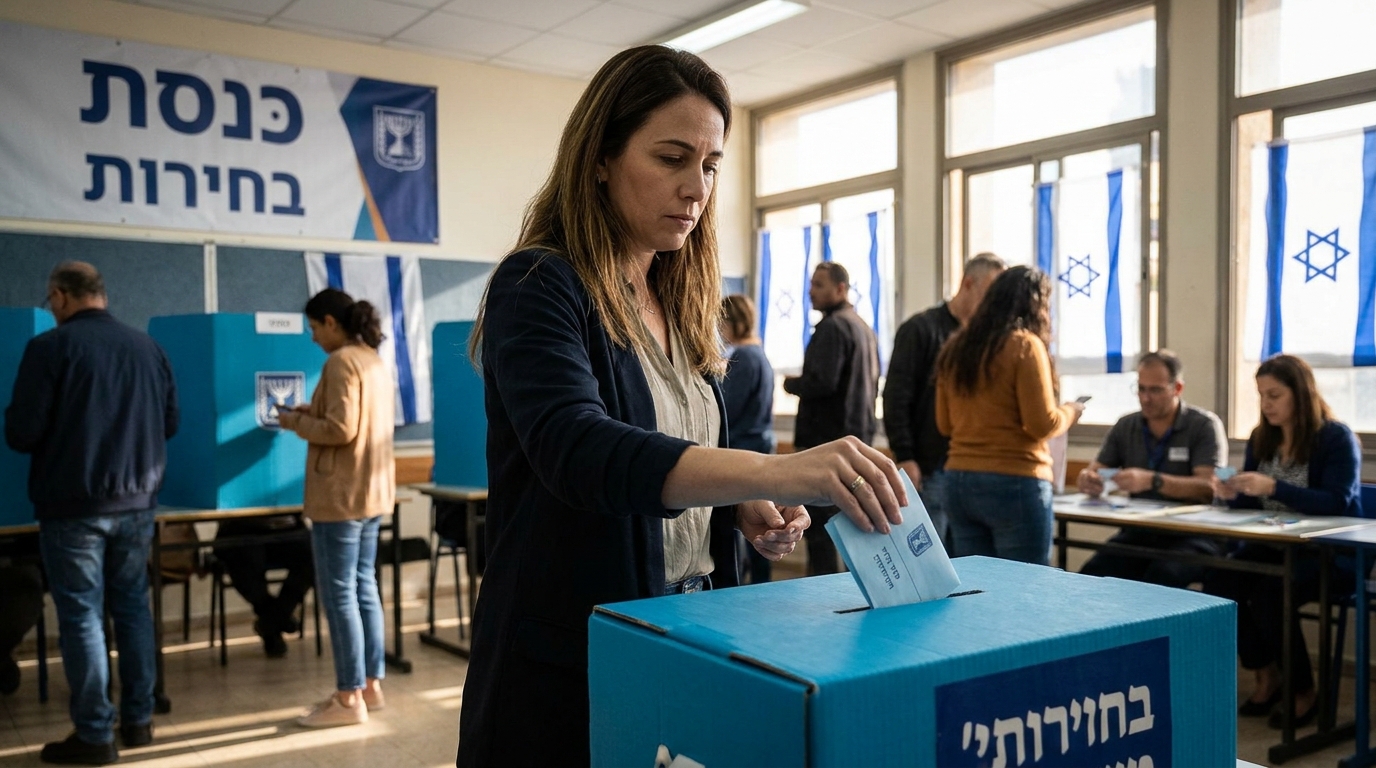
About 7.3 million eligible Israelis go to the polls Tuesday, October 27, to elect the 26th Knesset. It is the first time they have voted since the Hamas massacre and mass kidnapping on October 7, 2023. The election falls in the middle of an active regional war, and the coalition that emerges from it is a direct input into how that war ends, or doesn’t.
Market Snapshot
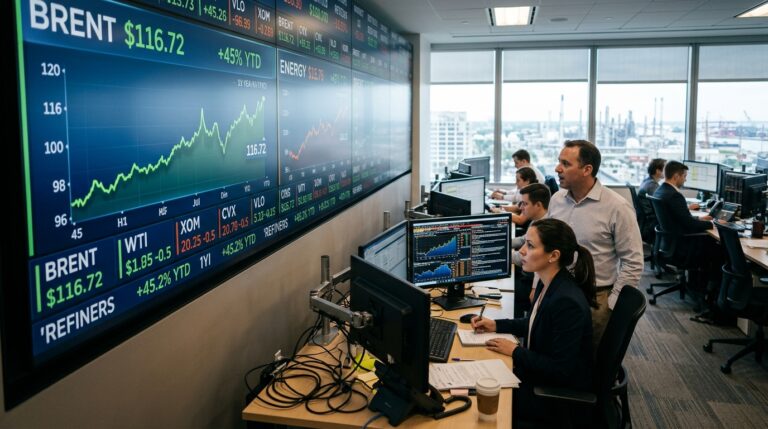
Brent crude rose to a six-month high on Friday, closing at $116.72 a barrel, as investors increasingly expect the U.S. to resume strikes on Iran. The contract traded as high as about $117.45 during the session. Brent futures were on track to gain about 6% for the week, marking a third consecutive week of increases.
Speaking at a midterm rally in Fort Myers on Thursday, Trump said, “We may do another little ‘Operation Rising Fury.'” But publicly available reporting does not support “Operation Rising Fury” as the codename for the U.S.-Israel strikes that opened the current war. Public reporting has described the initial U.S. strikes as “Operation Epic Fury.” Separately, the administration has described its sanctions campaign as “Operation Economic Fury.” The New York Times reported that the two countries have drawn up plans for a short, concentrated strike and that fighter jets have been conducting practice flights over Iraq. Potential targets include Iran’s energy infrastructure, nuclear facilities, and missile and drone capabilities.
Attacks have added to concerns about oil shipments through the Strait of Hormuz. Iran has said multiple tankers have been damaged in or near the strait, including reports of tankers hitting mines. U.S. Ambassador to the United Nations Mike Waltz told the Financial Times that the war with Iran could last another year.
Stocks in Focus
- Energy majors: The prospect of renewed hostilities has raised concerns that oil production, export infrastructure, or shipping routes could be affected, adding a geopolitical risk premium to crude prices.
- Defense stocks: Defense stocks can be expected to benefit the most from deployment of resources and evidence of geopolitical tensions escalating to war. Watch Lockheed Martin, RTX, and Northrop Grumman for any post-election gap moves tied to fresh strike expectations.
- Airlines and chemicals: Non-cyclical sectors generally outperform macro-exposed and energy-intensive businesses; consumer non-cyclicals and energy benefit while chemicals and airlines face pressure.
The Election: What the Polls Say
Final polls aired by major Israeli TV networks showed Gadi Eisenkot’s bloc ahead, with roughly 52 to 56 seats in the 120-seat Knesset, and projected about 50 seats for Netanyahu’s bloc. None of the polls projected either bloc winning the 61 seats needed for a majority.
Polls show a majority for Netanyahu’s opponents in some bloc breakdowns, but coalition math is complicated by parties’ red lines over cooperation with Arab parties. The result may be decided less by voters switching sides than by turnout and by which small parties clear the 3.25% threshold. Whatever happens on election night, the real outcome will be decided in coalition negotiations that follow, and another election cannot be ruled out.
Why This Is a Crude Oil Event
For markets, the central question is whether the election changes expectations for regional security, diplomatic relations, and risk of further escalations. Oil is the most direct link between these developments and global markets.
Energy majors are not passive bystanders to the coalition outcome. Chevron’s record quarterly profit shows how directly the Hormuz conflict has translated into upstream and downstream earnings for integrated oil companies.
A Netanyahu coalition, reliant on far-right partners who have publicly favored more aggressive military posture, would sustain the current war premium in Brent. An Eisenkot-led government, drawing from the military establishment but with a less maximalist coalition, opens the possibility of a diplomatic path, though any such shift would take months to materialize in supply conditions. A UBS analyst warned that further escalation could cause additional supply disruptions, and analysts say the duration and scale of any interruption will be crucial in determining how long prices remain elevated.
The Cheat Sheet
- Top Theme: A wartime election in Israel is now an oil price event, with Brent holding above $116 on strike expectations that the coalition result will either sustain or complicate.
- Stock to Watch: RTX and Lockheed Martin. Defense spending expectations accelerate under a hawkish Israeli coalition; any coalition signals Wednesday will move these names.
- Sector to Watch: Energy. The Brent war premium is the dominant sector driver right now, and Tuesday’s vote is the next input into whether that premium expands or starts to fade.
- Biggest Risk: Coalition talks drag for weeks with no clear winner, creating policy uncertainty that leaves traders without a directional read on the conflict’s next phase.
- Biggest Opportunity: Energy stocks with direct Brent leverage if post-election signals point toward renewed U.S. strikes; Brent at $117 with a path to its 2008 all-time high if Hormuz disruptions deepen.
- One Thing to Remember: Under Israel’s election timetable, official results are due by November 4. The market trades the coalition math, not just the vote count. Watch which small parties clear the 3.25% threshold on Tuesday night, they are the kingmakers.