
Every financial headline this week will quote $1.4 trillion. That figure, which Meta disclosed in a court filing as the penalty four states could seek, sits uncomfortably close to the company’s market value, is designed to provoke. It is doing its job. But investors fixating on the penalty math are missing the real question the Oakland courtroom will force into the open.
The fine, however enormous in theory, is a one-time event. The injunction is not.
Why This Trial Matters Now
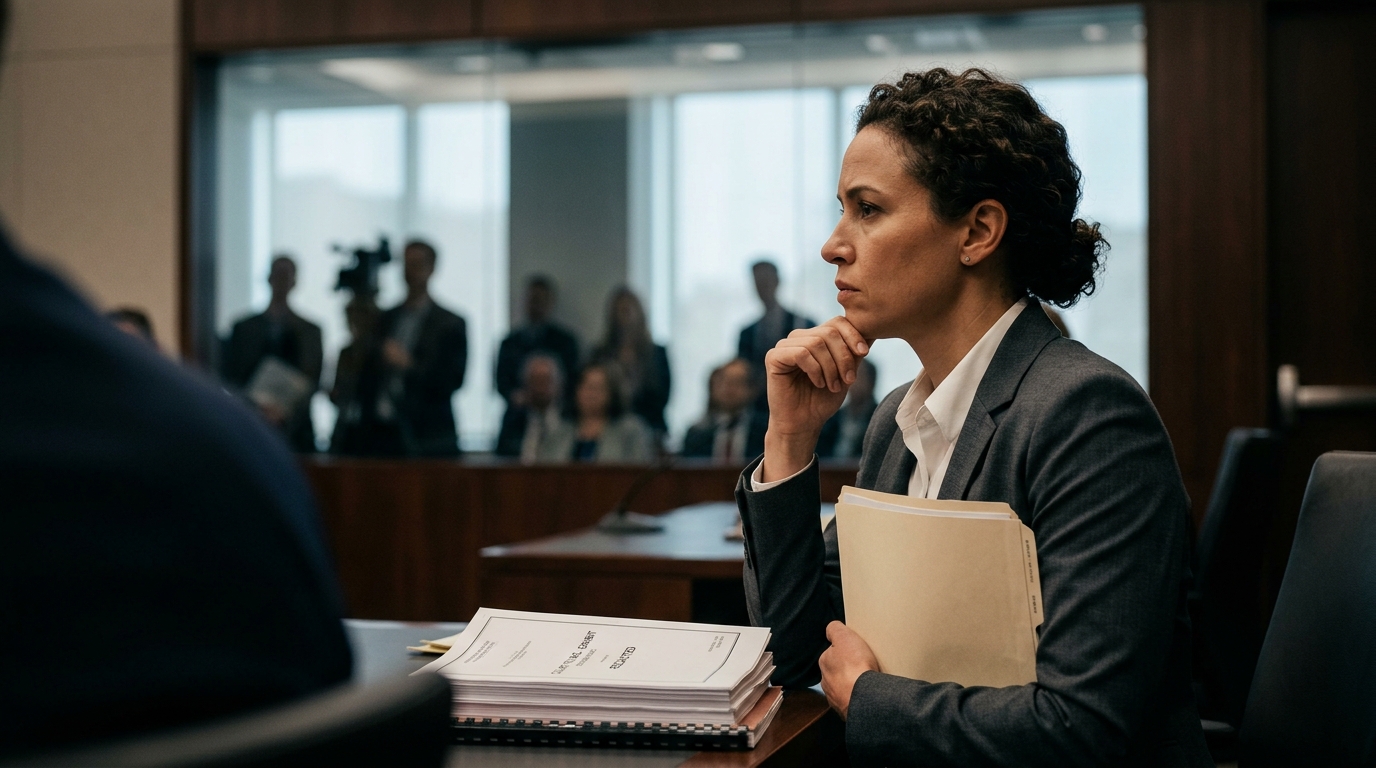
Jury selection began August 12 in a landmark federal case involving Meta and attorneys general from 29 states. Opening statements are scheduled for August 18. The trial is expected to run for several weeks, presided over by Judge Yvonne Gonzalez Rogers, who made the unusual decision to empanel an advisory jury to issue findings she will use to guide her ruling.
Meta founder and CEO Mark Zuckerberg is expected to testify, as is Instagram head Adam Mosseri. This will be Zuckerberg’s second time under oath in a social media addiction proceeding in 2026, following his appearance at the Los Angeles trial in February.
The Oakland case does not arrive in isolation. Meta was found liable on similar grounds in separate trials held in Los Angeles and New Mexico, but the combined damages were far smaller than $1 billion. The bellwether Los Angeles verdict came one day after Meta lost a state trial in New Mexico, where a jury ordered the company to pay $375 million in civil penalties for violating New Mexico’s consumer protection laws.
The Investment Thesis: It’s Not the Fine
Meta absorbs $375 million in New Mexico penalties with a short stretch of operating cash flow. Painful, reputationally damaging, but survivable. What the company cannot easily survive is a federal judge rewriting the architecture of its platforms.
The states want remedies that reach straight into the machinery powering Meta’s platforms: age restrictions, the removal of infinite scrolling, and changes to algorithms and AI models developed using children’s information. They are also seeking the removal of video auto-play and like counts for users under age 18.
This is not a peripheral ask. Meta receives about 98% of its revenue from advertising. Court-ordered or regulatory-driven platform redesign could affect engagement metrics, data collection practices, and advertising revenue generation, which are at the heart of that business. Remove infinite scroll. Disable autoplay. Restrict the algorithm for younger users. Each change on its own is manageable. Ordered simultaneously across U.S. platforms by a federal court, with the February 2027 school district trial waiting behind this one, the cumulative effect is structural, not cosmetic.
The Business Behind the Stock
Meta posted Q1 2026 revenue of $56.31 billion, up 33% year over year, with EPS of $10.44. The underlying growth engine is genuine. Analyst sentiment remains bullish, but the specific numbers move around: median targets have varied widely in 2026, and Cantor Fitzgerald’s published price targets this year have been below $920.
That growth depends entirely on one mechanism: Meta makes money by keeping billions of users engaged and turning that attention into advertising dollars. Engagement-maximizing features, the very same infinite scrolling, algorithmic amplification, and push notifications at the center of this trial, are not cosmetic features bolted onto an otherwise stable business. They are the business.
What’s Changing
Courts are systematically closing off Meta’s traditional legal shelter. The social media industry is facing unprecedented changes in 2026, as various jurisdictions have ruled unfavorably against broad Section 230 defenses in cases that focus on a platform’s own conduct or statements. In April, the Massachusetts Supreme Judicial Court held that Section 230 did not bar a deceptive business practices claim alleging Meta made misleading statements about Instagram’s safety and addictiveness.
International pressure is compounding domestic exposure. In July 2026, the European Commission said it had preliminarily found that the addictive design of Instagram and Facebook breaches the Digital Services Act, citing features such as infinite scroll, autoplay, push notifications, and highly personalised recommender systems. If finalized, those findings could demand substantial operational and product changes across Meta’s EU operations.
A Reuters/Ipsos poll found 85% of Americans think social media can be addictive for children, with 61% saying social media companies need firmer oversight. That public opinion backdrop makes legislative action more plausible, not less, as the trial unfolds.
The Risks
Bull case. Meta’s defense is coherent. A Meta spokesperson called the states’ claims unsubstantiated, saying they offer no proof anyone was actually misled and attempt to penalize Meta for industry-wide challenges like age verification. The $1.4 trillion figure is a proposed penalty calculation, not a verdict. The states derived it by multiplying per-violation fines under state law against the number of young users they claim were harmed. No court has awarded remotely that sum in consumer protection history. The advisory jury structure in Oakland means the judge, not jurors, issues the final ruling, giving Meta more room to argue on legal grounds. Appeals are virtually certain regardless of outcome, and the process could consume years.
Bear case. The market has bought every dip: after New Mexico, after the Los Angeles verdict, after the $1.4 trillion filing. That complacency may be rational in isolation. It becomes dangerous as the verdict count climbs. The legal approach that won the Los Angeles verdict shifted the target from platform content to platform design. The jury concluded Meta’s apps were deliberately built to be addictive and that executives knew this and failed to protect youngest users. That design-defect framing, now confirmed by juries, could influence how thousands of subsequent cases are argued and settled. New Mexico’s attorney general also suggested the verdicts could motivate Congress to re-examine Section 230. If that happens, the liability math changes fundamentally.
What Investors Should Watch Next
The fine number that emerges from Oakland, if it comes, will dominate headlines. Ignore it as a standalone figure and focus on three things instead.
First, watch whether Judge Gonzalez Rogers issues injunctive relief alongside any monetary penalty. If the states get their way, not only will Meta be on the hook for massive fines but also for making nationwide changes to its platforms. Second, watch Zuckerberg’s testimony for any concession on internal research showing platform harms, since that is precisely the category of evidence that turned the New Mexico and Los Angeles juries. Third, watch the February 2027 school district bellwether trial date. The next school district bellwether cases are scheduled to begin in February 2027. That case, combined with this one, will establish whether the litigation wave settles into manageable nuisance territory or builds toward something that forces platform-level compromise.
Bottom Line
Meta is not facing a tobacco-style existential crisis today. Its balance sheet is strong, its revenue growth is real, and the $1.4 trillion penalty figure will almost certainly never be enforced at face value. But the framing that dismisses the Oakland trial as noise misses what courts have actually confirmed this year: that the features powering Meta’s advertising engine have been found, by juries, to be defective products that harmed children. The litigation is no longer only a financial liability. It is becoming a direct driver of mandatory platform redesign. That is the risk the current P/E of roughly 22 times forward earnings is not pricing. Opening statements begin Monday. Pay attention to what the states ask the judge to order, not just what they ask her to fine.