August 27, 2026
Bonus Content: UP-NS Decision Pushed to H2 2027
Editor’s Note: When the 2008 financial crisis hit, 60 Minutes turned to Whitney Tilson to explain it – a segment that went on to win an Emmy. Billionaires Bill Ackman, David Einhorn, and Joel Greenblatt were among the earliest followers to his research. Now he’s connecting the dots on what he calls possibly the biggest energy story of the decade. See below…
Dear Reader,
Right now, the man CNBC nicknamed “The Prophet” – Whitney Tilson – is making what he believes is the biggest call of his 25-year career.
He recommended Apple when the entire company was worth just $7 billion…
Pitched Netflix on the very day it bottomed…
And walked viewers through the 2008 crash on 60 Minutes, in a segment that won an Emmy award.
His next huge call?
And it isn’t uranium, wind or solar.
In fact, most investors haven’t even heard of this fuel source before.
But lifelong Berkshire Hathaway disciple Tilson noticed Warren Buffett making a strategic company appointment moments before his retirement…
A move he believes offers huge clues to where the puck is heading next in the booming energy market…
And he’s convinced that people who invest now in this little-known power source have the potential to be the market’s next huge winners.
But the clock is ticking on this opportunity.
In fact, Tilson believes Wall Street money could rush in as soon as this October – the moment a key project in this niche power’s build-out phase is slated to finish.
That’s why he’s urging people to pay attention to this story right now – so they know how to claim a ground-floor stake while they still can.
Click here now to watch Whitney’s urgent broadcast.
Sincerely,
Matt Weinshenck
Publisher and Director of Research, Stansberry Research
UP-NS Decision Pushed to H2 2027
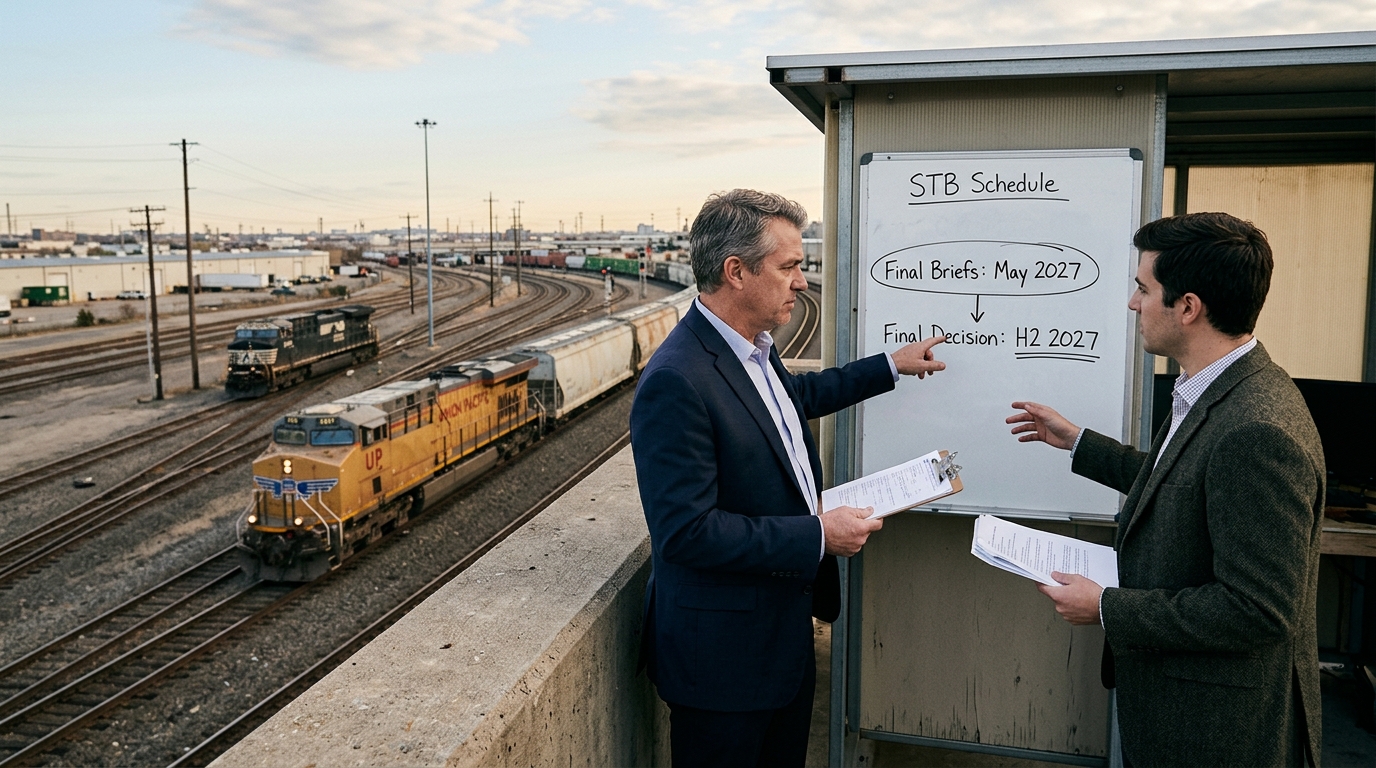
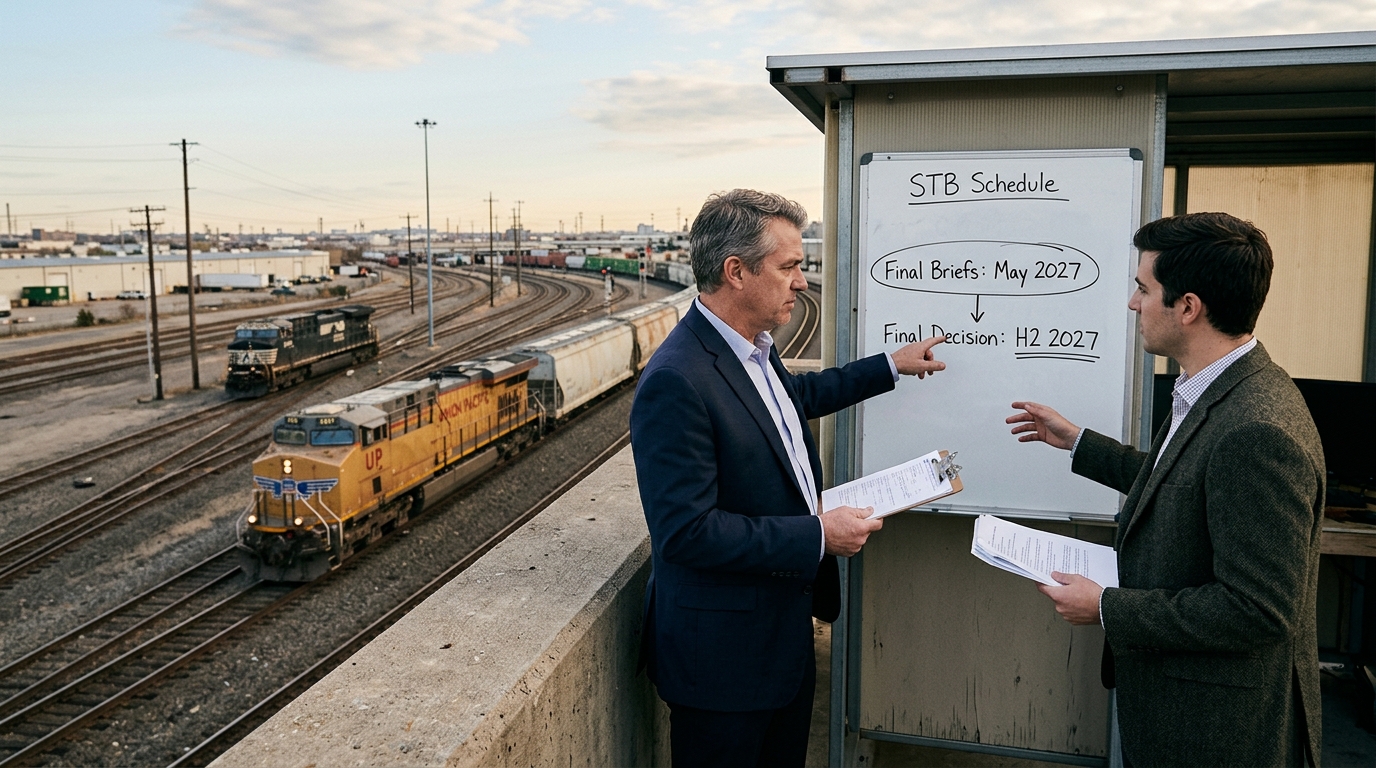
The Surface Transportation Board moved last week to restart what was effectively stalled. On August 18, 2026, the STB adopted a procedural schedule for the Union Pacific and Norfolk Southern revised merger application and removed the proceeding from abeyance. Traders hoping for a faster resolution did not get one. The schedule sets up final briefs for May 28, 2027, and the STB must issue a final decision within 90 days after the record closes, putting any ruling in the second half of 2027 at the earliest.
Here is the calendar every arb desk now owns:
- Aug. 28, 2026: UP and NS must refile certain workpapers without screening or filtering criteria so regulators can review complete datasets.
- Sept. 4, 2026: Those interested in participating in the review must state their intent.
- Nov. 18, 2026: Comments, protests, and requests for conditions are due. This is the session’s first hard catalyst.
- Dec. 3, 2026: Preliminary DOJ and USDOT comments are due.
- Feb. 16, 2027: Responses to comments, protests, and requests for conditions are due.
- May 28, 2027: Final briefs on the merger are due.
- H2 2027: The STB must issue a final ruling within 90 days after the record closes, and the record close date is still TBD. That makes a decision most likely in the second half of 2027.
One complication: a final decision would not be issued if the required environmental review were not yet complete. That is a secondary risk traders tend to underweight.
The Spread and the Break Fee
The $85 billion merger agreement includes a $2.5 billion reverse termination fee. The spread math reflects that tension. Norfolk Southern’s share price sits about 5% below the $320 deal price, leaving limited upside but significant downside if the STB blocks the merger. For arb players, you are collecting carry on a position that now has a confirmed closing window no earlier than the second half of 2027, with the deal agreement set to expire January 28, 2028, but providing for automatic extensions on STB-driven delays.
The opposition is organized and well-funded. Competing companies BNSF Railway, CSX, Reading Blue Mountain and Northern Railroad, and industry organizations including the Freight Rail Customer Alliance and the National Grain and Feed Association have pushed the STB to use the full time allowed under the agency’s procedural rules for a major merger review. When your primary opponents are asking for maximum delay and citing statutory authority, they are not posturing.
CSX as the Residual Read
CSX (CSX) is trading as a direct read on the deal’s outcome, and the position is not passive. CSX launched a public resource at csxstayingontrack.com to support shippers and other stakeholders interested in engaging with the STB’s review. CSX warns the proposed combination would create a single transcontinental carrier plus four regional carriers, which it says would reduce routing options and competitive choices for shippers. That is an active lobbying posture dressed in stakeholder language.
If the deal closes on current terms, CSX loses its structural duopoly position in Eastern freight and faces a transcontinental competitor with a 50,000-mile network. If the STB blocks or demands heavy divestitures, CSX’s competitive position stabilizes and potential consolidation speculation likely returns. Activist pressure on CSX from Ancora confirms this is a sector reorganization story, not a single-stock event.
What to Watch
November 18 is the first real information event. The volume and character of the protests filed that day, particularly whether DOJ files formal objections alongside shipper groups, will tell traders more about STB sentiment than anything either railroad says publicly. Watch NSC’s spread relative to UNP’s standalone price action into that date. Any widening above current levels signals the market pricing additional approval risk. CSX moves inversely on the same catalyst.