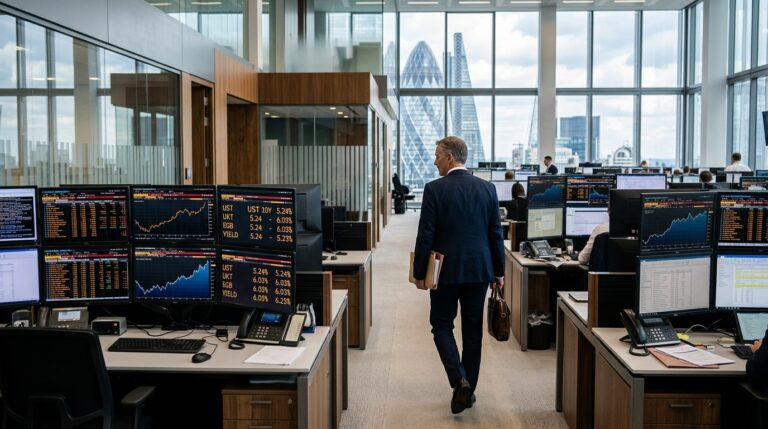

The debate inside institutional investment committees right now is not whether Anthropic will list. It is whether the bid is deep enough to take the other side of what Goldman Sachs, JPMorgan, and Morgan Stanley are putting on the market.
Investors are targeting a $2 trillion IPO valuation for a planned Q4 2026 offering, which would make it the largest IPO in history if it happens at that level. The company took the first step on June 1, 2026, with a confidential S-1 filing with the SEC. Anthropic has not yet made its S-1 public, but Axios reported in late August that the company is expected to flip it within weeks, keeping an October window in play.
Why Wall Street Cares
The IPO market in 2026 is testing how much new equity supply investors can absorb without selling the stocks that drove the market higher. Renaissance Capital data shows U.S. IPO proceeds were about $145.8 billion year-to-date as of the end of June 2026, up roughly 543% from the same point in 2025. Anthropic lands into that market asking for more than any single offering has ever required.
The reference point is SPCX. SpaceX confirmed the pricing of its IPO at $135 per share, with trading expected to begin June 12, 2026, under the ticker symbol “SPCX.” Reports at the time said the deal was oversubscribed, with one Bloomberg report putting demand around $150 billion, roughly two times the $75 billion raise. That clearance was decisive for the bull case on Anthropic. Given the institutional gains generated through SpaceX, some expect investors to redeploy winnings into the next mega-IPO, and that large-cap, AI-fueled hypergrowth assets face no shortage of capital.
The Bull Case
The SpaceX transaction demonstrated the depth of investor demand for scaled, category-defining growth businesses, and while the offering prompted questions about whether it would absorb liquidity from the broader IPO market, the wider IPO calendar continued to function alongside it.
Anthropic’s annualized revenue has been widely reported to have reached $30 billion by early 2026, up from much lower levels in 2025, underscoring the pace of scaling now associated with frontier AI labs. J.P. Morgan has argued that 2026 buybacks could reach about $1.5 trillion, returning cash to shareholders that could help fund new IPO demand. The argument is structural: there is simply more money looking for AI exposure than there are vehicles to absorb it.
The Bear Case
The counterargument starts with index mechanics. S&P Dow Jones Indices decided in June 2026 not to fast-track megacap IPOs into the S&P 500, leaving the seasoning and GAAP profitability requirements unchanged. The S&P 500 will not be the day-one buyer of last resort for mega-cap AI IPOs, pushing the burden to active managers and non-S&P passive mandates, with any S&P-driven demand a 2027 story contingent on earnings and float.
That is the pinch. The size of Anthropic’s compute bills and capital commitments has been a recurring point of investor scrutiny, but specific single-year figures vary widely across reporting and are not yet anchored by a public prospectus. A company burning at that rate, priced at $2 trillion without S&P 500 index buying on day one, is entirely dependent on active allocators and Nasdaq-100 passive flows to clear supply.
Then there is the pipeline problem. OpenAI followed Anthropic’s filing a week later, on June 8, 2026, with its own confidential S-1 submission. Anthropic’s pricing will set a valuation comp that constrains how OpenAI can price its own offering; if Anthropic prices conservatively, OpenAI’s path to its target valuation gets harder. Both sides of that trade fall on the same pool of institutional capital.
What Investors Are Missing
The supply debate is being framed as a binary: either demand absorbs the wave or it doesn’t. The more consequential question is sequencing. Bankers are widely viewed as treating first-mover advantage as real in this cycle, with the first mega-AI listing shaping how investors categorize the sector and how capital gets allocated across the next cohort.
Databricks has already read that calendar and acted accordingly. Databricks closed a $5 billion strategic funding round on August 13, 2026, at a $190 billion valuation, led by Coatue and joined by Blackstone, MGX, T. Rowe Price accounts, and Sixth Street Growth. CEO Ali Ghodsi told TechCrunch that Databricks did not need to go public to raise capital and framed the round as a deliberate choice. That private-round discipline tells you something about how sophisticated investors view the absorption risk: real enough that one of the most anticipated listings of the cycle stepped aside.
Stocks to Watch
- SPCX (SpaceX): The template. Bloomberg Intelligence estimates S&P 500 funds would need to absorb 19% of SpaceX’s public float upon index inclusion, with Russell 1000 and Nasdaq-100 funds absorbing another 24%. Lock-up expirations and S&P inclusion timing will drive flows into 2027, making it the clearest read on whether the absorption thesis holds.
- Goldman Sachs, Morgan Stanley, JPMorgan: Reports have described an Anthropic IPO as potentially raising on the order of $60 billion, with the bulge-bracket banks positioned to benefit from fees and follow-on advisory work across the AI pipeline, including OpenAI.
- Snowflake (SNOW): Mega-listings from SpaceX and the next wave of AI offerings could absorb a large amount of IPO capital. Active managers funding those allocations will trim existing positions first; crowded software names like Snowflake are a plausible source of that liquidity.