September 4, 2026
Bonus Content: Can Micron Double From Here? The $2 Trillion Clock Is Ticking.
Editor’s note: Please see the following from Professor Joel Litman, a former consultant to the Pentagon and FBI, who just flew a small helicopter near one of the most secure sites in America to uncover what he says could soon become the biggest stock market story of 2026…
Potential $10 Trillion Breakthrough
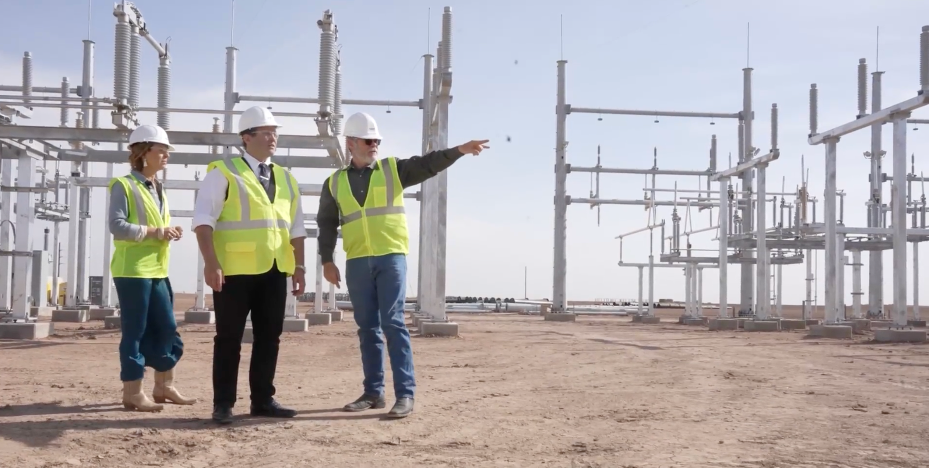
I just traveled halfway around the world to one of the most remote and possibly dangerous sites in America… to witness a potential $10 trillion technology backed by Elon Musk and Sam Altman.
The site I visited is in an area marked as a “top 7 nuclear target” by Russia – alongside Camp David and the Pentagon.
And every morning, at 6 a.m., you may hear bombs going off.
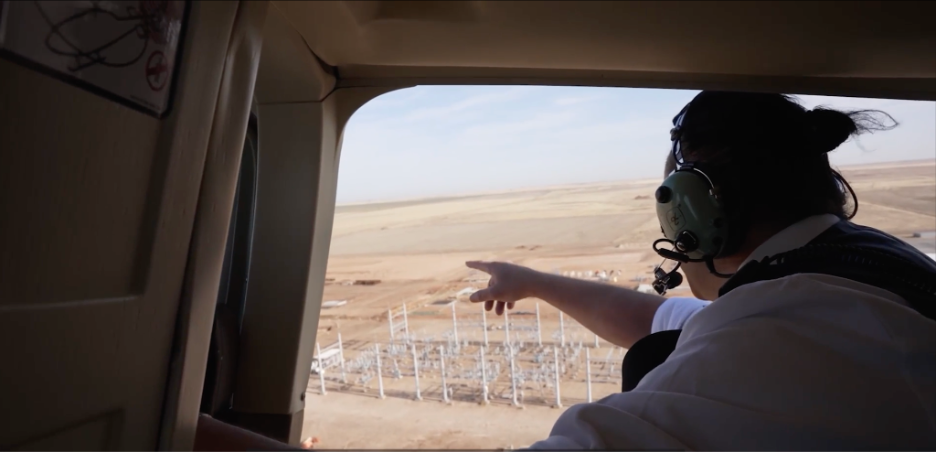
This is me flying in on a small helicopter…

You’d be arrested if you got too close to this place…

But I got special permission to enter… because I know what’s hiding in plain sight there…
And it’s quickly becoming one of the most sought-after products in the world, with “years-long” backlogs already forming.
The Financial Times reports that Sam Altman has been begging a small company over the phone to build this for him.
This is supported by Meta, Google parent Alphabet, Amazon, and Nvidia CEO Jensen Huang…
And even President Trump has stepped in to greenlight this underlying technology with an emergency executive order.
But most importantly for you…
I believe the stocks involved in this could soar in the days ahead as this news breaks.
That’s because no one – not even Elon Musk – can get their hands on this without going through a small group of little-known companies that own the rights to this technology.
You could back these companies right now, in your regular brokerage account – before this goes mainstream.
I’m sharing all the details on the ground at this heavily secured site in West Texas, where this technology is about to go live…
Click here to see my full report.
Regards,
Joel Litman
Chief Investment Officer, Altimetry
P.S. I’m sharing the name of the company that Sam Altman has asked to build this tech for OpenAI – for free.
Can Micron Double From Here? The $2 Trillion Clock Is Ticking.
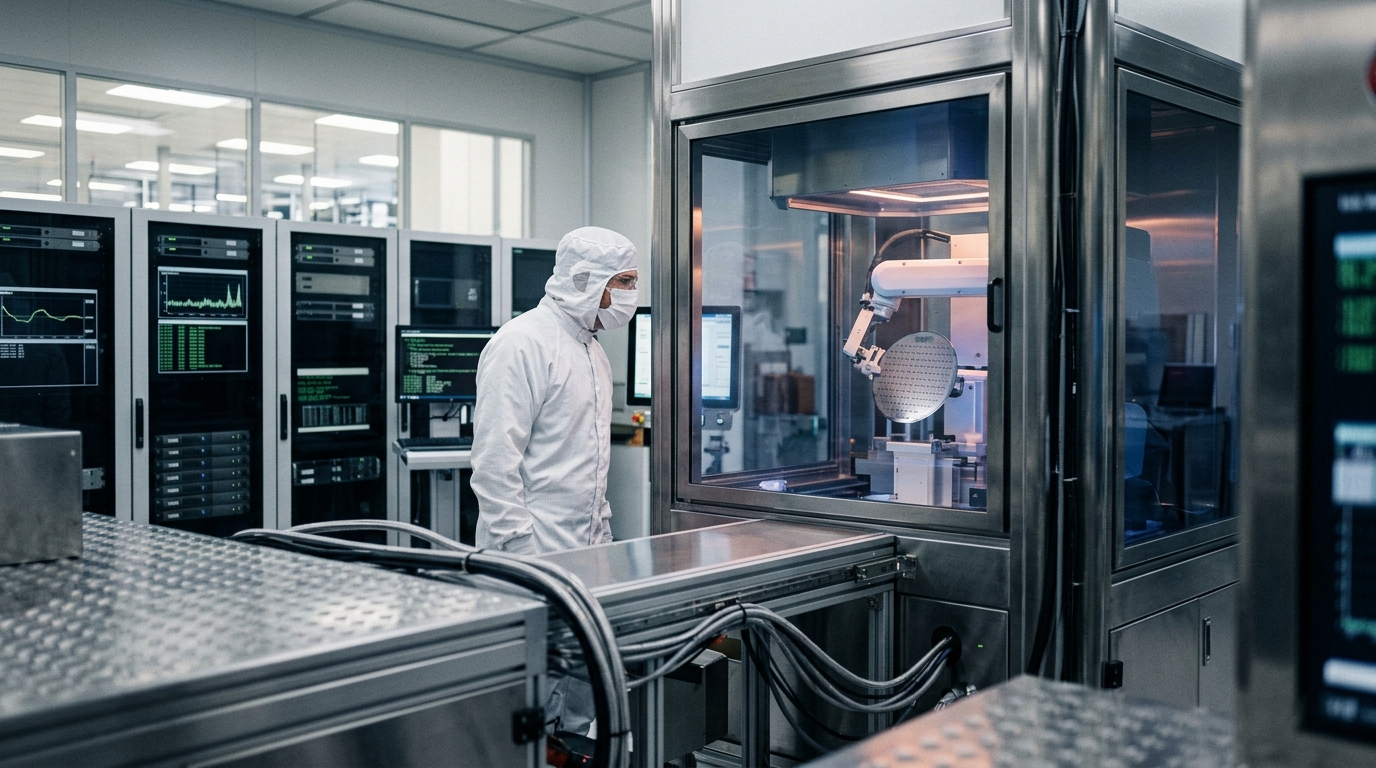
Sitting at roughly $1.08 trillion in market cap as of September 4, Micron is priced for a company that has already won the AI memory supercycle. The more interesting question is whether it is priced to double.
The underlying numbers are difficult to argue with. Fiscal Q3 2026 revenue hit $41.46 billion, a 346% year-over-year increase. Non-GAAP gross margin expanded to 84.9%, non-GAAP EPS came in at $25.11 against a $21.39 estimate, and Q4 guidance landed at $50.0 billion. Data center revenue exceeded $25 billion in the quarter, running at a $100 billion annualized pace. Micron also signed 16 strategic customer agreements covering committed volumes through 2030, with cumulative minimum revenue across 14 of those agreements disclosed at approximately $100 billion.
New Street Research upgraded MU to Buy with a $1,250 target, arguing this cycle structurally breaks from historical boom-bust patterns. At a forward multiple near 6.7x, Micron remains one of the cheapest large-cap AI infrastructure names in semiconductors.
Three Execution Tests That Determine the Timeline
HBM share under pressure. In Q2 2026, Counterpoint Research placed SK hynix at 50% of global HBM revenue, Samsung at 33%, and Micron at 18%. Samsung’s 33% represented a sharp jump from Q1, driven by becoming the first to begin mass production of HBM4. Micron has said it began volume shipments of its HBM4 in the first quarter of calendar 2026 and is targeting roughly 20% to 25% HBM share by late 2026, but it is supplying only 50% to two-thirds of key customers’ requirements in the medium term, per CEO Sanjay Mehrotra. That supply gap is pricing power today. It is also a hard ceiling on revenue until new capacity comes online.
Capex and fab sequencing. Full-year fiscal 2026 capital spending is tracking toward approximately $27 billion, with Q4 capex alone around $10 billion. The New York fab officially broke ground on January 16, 2026. Singapore is expanding as an HBM advanced packaging center with meaningful capacity expansion expected to begin in calendar 2027, and the Taiwan Tongluo site is expected to support meaningful shipments in mid-calendar 2027, roughly a quarter earlier than prior expectations. Startup costs of $100 to $200 million per quarter are manageable against $50 billion in quarterly revenue. Any program delay compresses 2027 HBM allocations and flattens the earnings trajectory the $2 trillion case depends on.
Samsung’s re-qualification risk. Samsung’s Q2 surge was powered by qualifying HBM4 first into volume production. If that qualification extends to Nvidia’s Vera Rubin platform at scale, Micron’s pricing leverage erodes. Micron counters with efficiency claims, including that its HBM4 offers improved power efficiency versus its prior-generation HBM3E. Those are real advantages. They are not permanent ones.
The Scenario Range
Bull: HBM capacity doubles on schedule, Samsung’s ramp stalls, hyperscaler capex holds firm, and FY2027 EPS reaches $158. At 10x earnings, a multiple still below the S&P 500 median, MU clears $2 trillion by mid-2027.
Base: Capacity ramps with modest delays, HBM share edges to 22 to 25%, and FY2027 EPS lands near $120. The stock drifts toward $1.6 to $1.7 trillion, with $2 trillion arriving late 2027 or early 2028.
Bear: Samsung qualifies HBM4 at volume, hyperscaler capex guidance is trimmed, and gross margins retrace toward 70%. EPS estimates compress, and $2 trillion gets pushed to 2029 or beyond.
What to Watch
Fiscal Q4 results are scheduled for September 30. Gross margin guidance and 2027 HBM allocation disclosures are the two numbers that matter most. A margin guide above 83% with confirmed forward bookings accelerates the $2 trillion timeline materially. A miss on either does the opposite, and the stock’s beta of 2.22 means the reaction will not be subtle. Position sizing heading into that report matters more than the directional view.
The business can support a $2 trillion valuation. The financials already suggest it. The only open questions are timing and execution, and both get clearer on September 30.