
September 21, 2026
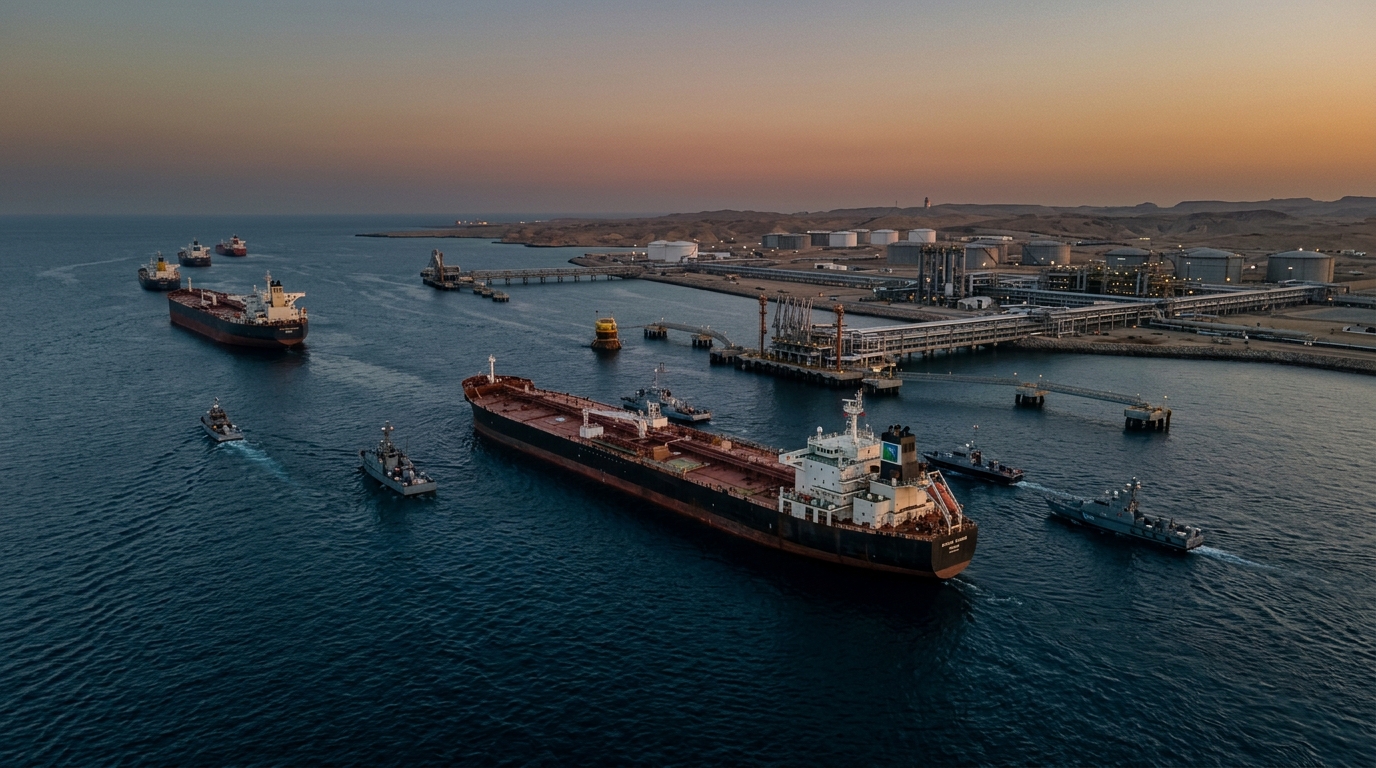
Aramco rerouted exports through Hormuz and crude fell four days straight.
Missiles struck near King Khalid International Airport in Riyadh on Saturday. The Houthis also claimed a hit on Aramco’s facilities in Yanbu, a key Red Sea export outlet for Saudi crude and refined products. By Monday morning, Brent was trading lower for the fourth consecutive session.
“My system said ‘SELL’ right before this stock tanked. Today, I’m shouting ‘BUY NOW’ before it soars.”
In 2023, Marc Chaikin’s system flashed bearish on an automotive company no one had yet heard of. The stock crashed 35%. Today, his system rates this company “Very Bullish” and Marc calls it a screaming buy thanks to a new “groundbreaking partnership” with Nvidia that hands this company the keys to the self-driving kingdom on a silver platter.
That is not the reaction traders accustomed to Middle East risk premiums would have predicted. The explanation sits in the flow data, not the headlines.
Market Snapshot
Brent fell to $101.71 a barrel by 02:13 GMT, down $2.16, or 2.08%, touching its weakest level since September 10. Saudi exports have risen to just over 4 million barrels per day so far in September, compared with 2.4 million bpd in August 2026, according to provisional data from Kpler cited by Reuters. August’s level was the lowest recorded since at least 2013. The market looked at those barrels, not at the smoke over Riyadh, and sold.
Attacks linked to the Saudi East-West pipeline disruption have pushed Aramco to rely more on Persian Gulf loadings. Satellite data cited by JPMorgan indicated Saudi oil moving through the Strait of Hormuz averaged 2.9 million bpd over the past six days, up from just 700,000 bpd in August.
Alert: The DeFi Token Set to Explode as Markets Recover
Major institutions are fighting to acquire this DeFi protocol before prices surge in the post-tariff rally that’s already beginning. This isn’t speculation – this platform’s role is so essential to crypto’s financial system that its current price defies all logic.
Just Released: The DeFi token set for massive gains as markets heat up – only $3!
JPMorgan analysts said in a September 18 note that total Middle East oil flows averaged 17.1 million bpd in the past 10 days, just 6.1 million bpd below the 2025 average. Aramco has effectively replaced its Red Sea route with Persian Gulf throughput. The market has noticed.
Stocks in Focus
Two groups of energy stocks are reading this moment very differently. Refiners benefit when crude costs ease while refined product demand holds. Diesel has not responded to any of the relief headlines. The product market is setting the floor regardless of what crude does on the Saudi export story. That dynamic favors MPC, VLO, and PSX in the near term.
Integrated majors XOM and CVX are harder to position. A sustained crude recovery above $105 Brent would shift the advantage back to upstream names, but with Brent at $102 and trending lower, that threshold is not in immediate reach. Watch Q3 earnings calls in late October for guidance on how each company is reading pipeline restoration timelines.
For Traders Protecting a Nest Egg
If you’re trading with money you spent decades saving, one bad options trade hurts more than it should.
The first few checks on this list are all about protecting your account before you think about anything else.
The Smart Trade Options Checklist.
Normally $29.97. Free today.
The Second Driver: UNGA Diplomacy
Iranian President Masoud Pezeshkian will lead a delegation at the United Nations General Assembly in New York on Tuesday, after the Trump administration said it would allow top Iranian officials to attend even as Washington and Tehran remain at war. President Trump has also said he would be open to meeting Pezeshkian during the assembly.
The Iranian delegation’s attendance at the UN has lifted market sentiment to start the week, with oil prices easing as traders weigh the odds of a diplomatic path to de-escalation.
Skepticism is warranted. The ceasefire agreed on June 17, 2026, which had reopened the Strait of Hormuz and sent oil prices tumbling from their conflict highs, broke down in early July after fresh attacks on shipping in and around the strait. The pattern of agreements dissolving quickly in this conflict is well established.
The Cheat Sheet
- Top Market Theme: Saudi Arabia’s logistics pivot through Hormuz is outweighing Houthi headline risk, pulling crude lower despite active strikes on kingdom infrastructure.
- Stock to Watch: MPC. Refiner margins benefit directly as Brent retreats from its September 14 high near $108, and crack spread dynamics favor downstream names this session.
- Sector to Watch: Energy refiners over integrated majors. Brent below $105 is the refiner’s friend; a reversal above that level quickly changes the calculus.
- Biggest Risk: U.S. Energy Secretary Chris Wright said September 15 the East-West pipeline would restart within days, but other assessments have pointed to a longer repair timeline. If Saudi Hormuz flows plateau while the pipeline stays constrained, the export recovery stalls and crude firms sharply.
- Biggest Opportunity: If UNGA produces even a framework for renewed US-Iran talks, the remaining war premium compresses further and downstream energy names extend their outperformance.
- One Thing to Remember: Aramco’s export data matters more this week than anything said at a podium in New York. Watch Kpler’s daily flow numbers. The 4 million bpd figure either holds or it does not, and crude will price accordingly.