The conventional case for Walmart acquiring the rest of Symbotic runs like this: vertical integration locks down proprietary robotics, eliminates a vendor markup, and closes the supply chain software loop. That thesis is fine. But it misses the more immediate pressure pushing the deal from “interesting” to “urgent.”
Symbotic is in trouble right now, and Walmart cannot afford for it to be.
The Dependency Problem Is Already Priced In
Walmart is Symbotic’s largest customer, accounting for approximately 85% of Symbotic’s fiscal 2025 revenue, and for a significant majority of its backlog as of the end of fiscal 2025. Symbotic’s long-term master automation agreement with Walmart has an initial term that expires in May 2034 with annual renewals thereafter. That is not a partnership. That is a lifeline with a ticker. Symbotic now faces a credibility problem, because its competitive advantage rests on being the only vendor Walmart bet its own equity on, and delays open the door for rivals like Knapp and Dematic to pitch alternative automation architectures.
SYM started the year at $59.50. It has since fallen about 34.5% and was trading near $39 as of late October 2026. The 52-week high sits at $87.88. Needham kept its Buy rating but cut its price target to $60 in mid-September 2026, citing share price underperformance. The gap between where analysts think SYM should trade and where it actually trades is the discount Walmart could exploit.
What Walmart Is Building Requires Symbotic to Work
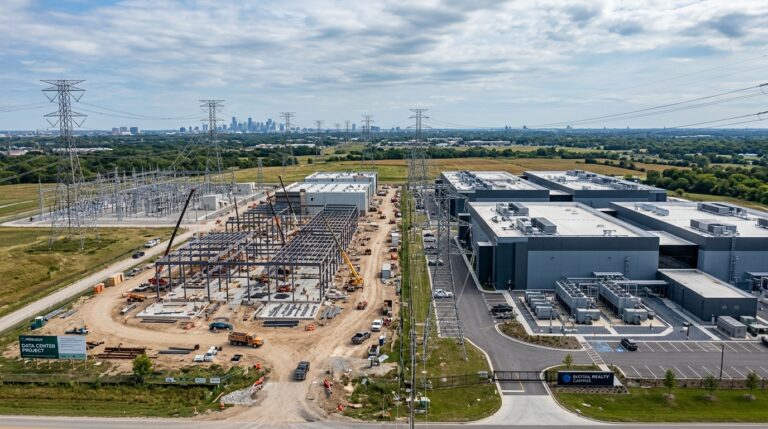
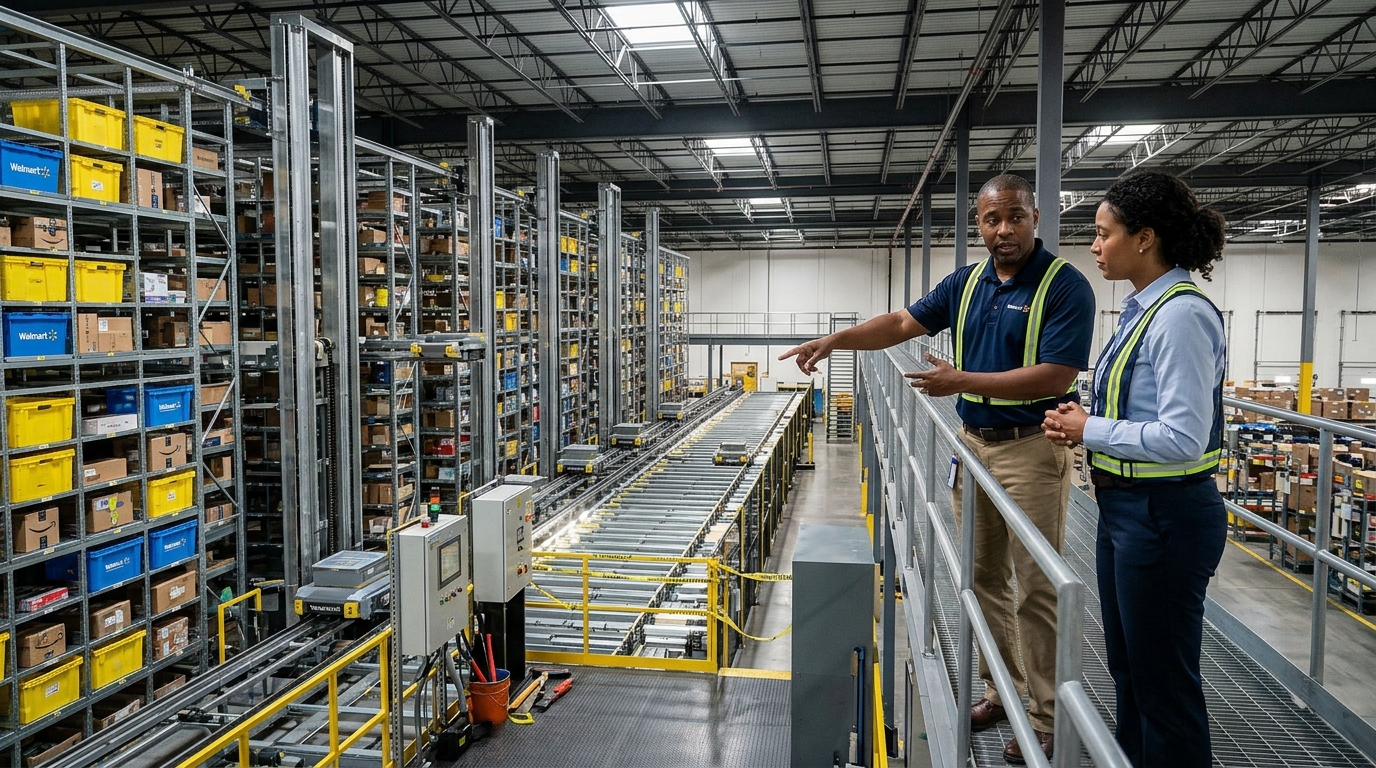
Walmart has said its next generation fulfillment centers, combined with the rest of its fulfillment network, can reach 95% of the U.S. population with next-day or two-day shipping. Walmart just opened its fifth next-generation fulfillment center in Stockton, California, a more than 900,000-square-foot facility designed to increase storage capacity and serve customers across the West Coast. Walmart has also said Marketplace items shipped by Walmart Fulfillment Services run through these next generation facilities, making the automation buildout directly relevant to the growing base of brands selling through Walmart Marketplace.
Vertical integration as a fix for vendor execution risk is not unique to retail logistics. GE Aerospace spent nearly $12 billion acquiring a castings supplier it could not fix from the outside, choosing ownership over the continued risk of supply-chain constraints slowing engine output.
The infrastructure ambition and the vendor execution risk are on a collision course. Under the commercial agreement announced in January 2025, Symbotic will develop enhanced pickup and delivery fulfillment systems, with Walmart committed to purchasing systems for 400 store-level micro-fulfillment deployments if performance criteria are achieved. That conditional clause is doing a lot of work. If Symbotic stumbles on delivery, Walmart’s entire next-day logistics pitch weakens.
The Ownership Math Already Points One Direction
Based on 129.873 million Class A shares outstanding as of August 3, 2026, Walmart’s position corresponds to 39.9% of Class A common stock on an as-converted basis, though it holds about 5.4% of aggregate voting power, a consequence of Symbotic’s multi-class structure. That voting gap is the real obstacle to a quick deal, not the price. The commercial agreement attached to the January 2025 announcement includes a development program and store-level system purchase commitments that can materially expand Symbotic’s future system deployments if performance criteria are met.
Owning 40% of a vendor whose success or failure is almost entirely tied to your own fulfillment ambitions is an awkward position. A full acquisition converts that dependency into a structural advantage and removes the risk that a stumbling public company drags Walmart’s logistics timeline with it. The price is lower than it has been in over a year. The strategic logic has not changed. The urgency has.