Carrier Global’s stock dropped roughly 7% to 8% in premarket trading on October 29 despite beating Q3 estimates by a wide margin. Adjusted earnings came in at $0.87 a share on revenue of $6.26 billion, topping forecasts of $0.77 a share and $6.10 billion in sales. That kind of reaction deserves a closer look, because the number the market apparently sold is not the number that matters most going into year-end.
The number that matters is what the backlog actually represents. Organic orders were up roughly 35%, with data center orders up approximately 300%, resulting in over $8.5 billion of backlog, up 60% versus last year. Here is the part most commentary missed: that record backlog of more than $8.5 billion excludes minimum volume commitments under long-term agreements. In other words, $8.5 billion is the floor.
After quarter-end, Carrier said it signed an agreement with a hyperscaler for more than $3 billion, with a significant portion covered by a minimum volume commitment. Those minimums sit on top of the published backlog figure. Traders pricing CARR off headline backlog alone are working with an incomplete count.
The breadth of demand is also being underweighted. Non-data center commercial orders increased 20% in Q3, which means building modernization and industrial efficiency upgrades are holding their own even as data center cooling grabs the spotlight.
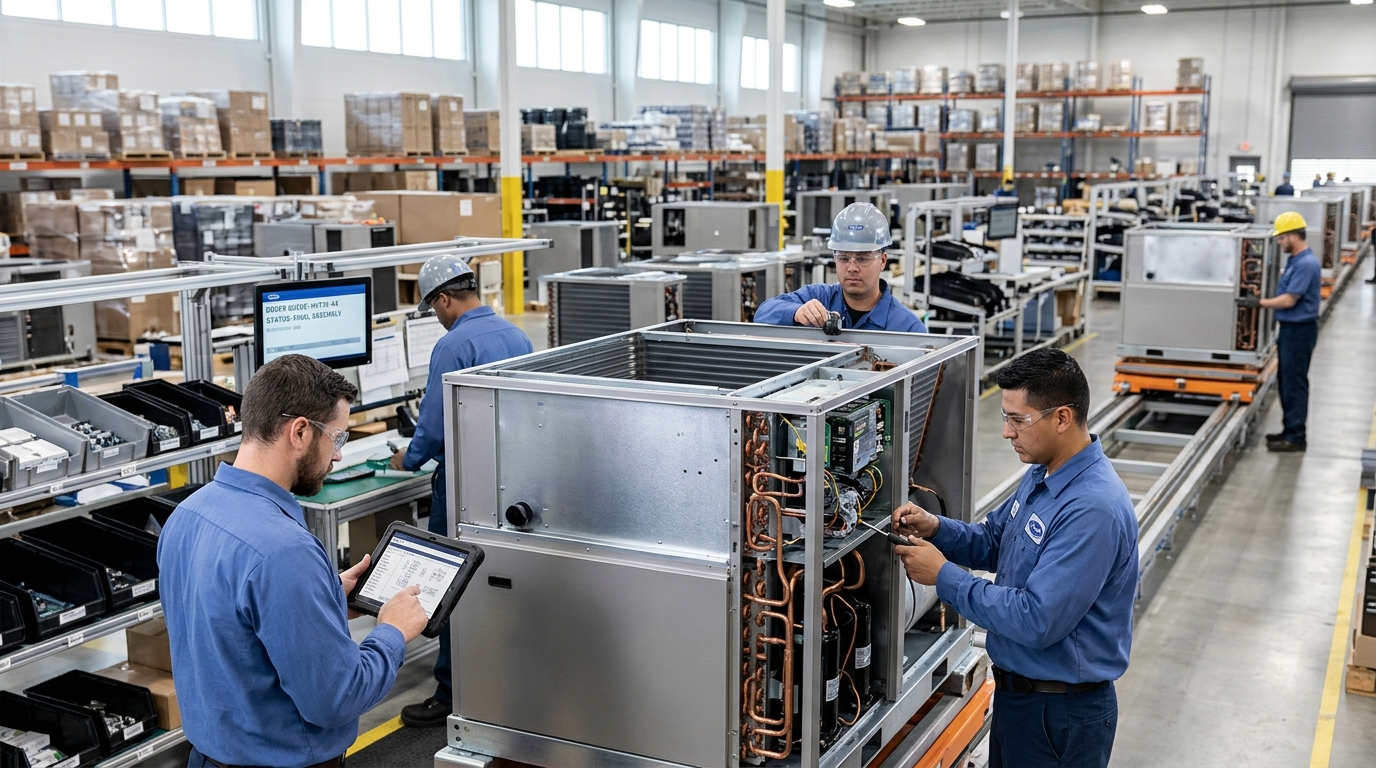
Capacity is the constraint, not demand. Carrier announced plans to invest more than $600 million over the next three years in a new advanced manufacturing and engineering center in Fort Worth, Texas, specifically to address production limits on commercial chillers. The company has said it expects to begin operations at the facility in 2027. Until then, backlog converts slower than order flow suggests.
That timing gap is the actual risk, and it is more specific than the vague margin pressure the market cited for the sell-off. Carrier flagged $550 to $600 million in input cost headwinds for the year. Those are real offsets, but they are running against a full-year sales outlook raised to nearly $24 billion with organic growth of about 10%.
Input cost headwinds running against a raised sales outlook is a pattern appearing across the AI infrastructure complex. GE Vernova’s record backlog and raised free cash flow guidance still left the stock trading nearly a quarter below its peak.
Looking ahead to 2027, Carrier said it expects to enter the year with record backlogs, accelerating commercial and data center demand, recovering residential markets, and continued aftermarket growth. That combination, supported by contractual minimums that do not appear in the published backlog, is a different risk profile than the premarket move implied. The Q4 sell-off created a level worth watching closely.