November 3, 2026
Bonus Content: Lilly’s Volume Machine Has a Price Problem Baked In
“I think Anthropic is worth $3 trillion today.”
That’s the prediction from famed tech investor Gavin Baker on the All-In Podcast.
Anthropic’s last private round valued the company at $965 billion.
Baker says the public market would pay 3X that.
The IPO could happen as soon as October.
That’s why I’m claiming my Pre-IPO stake right now – before the stock starts trading.
Here’s how you can join me (email required).
Ian
Lilly’s Volume Machine Has a Price Problem Baked In
Eli Lilly’s stock is trading near $1,420 on November 3, up about 57% over the past year and sitting just below its 52-week high of $1,449.68. Q3 revenue beat consensus estimates by roughly $1.8 billion, and management raised full-year revenue guidance to between $91 billion and $92 billion. By almost every headline metric, the GLP-1 machine is working.
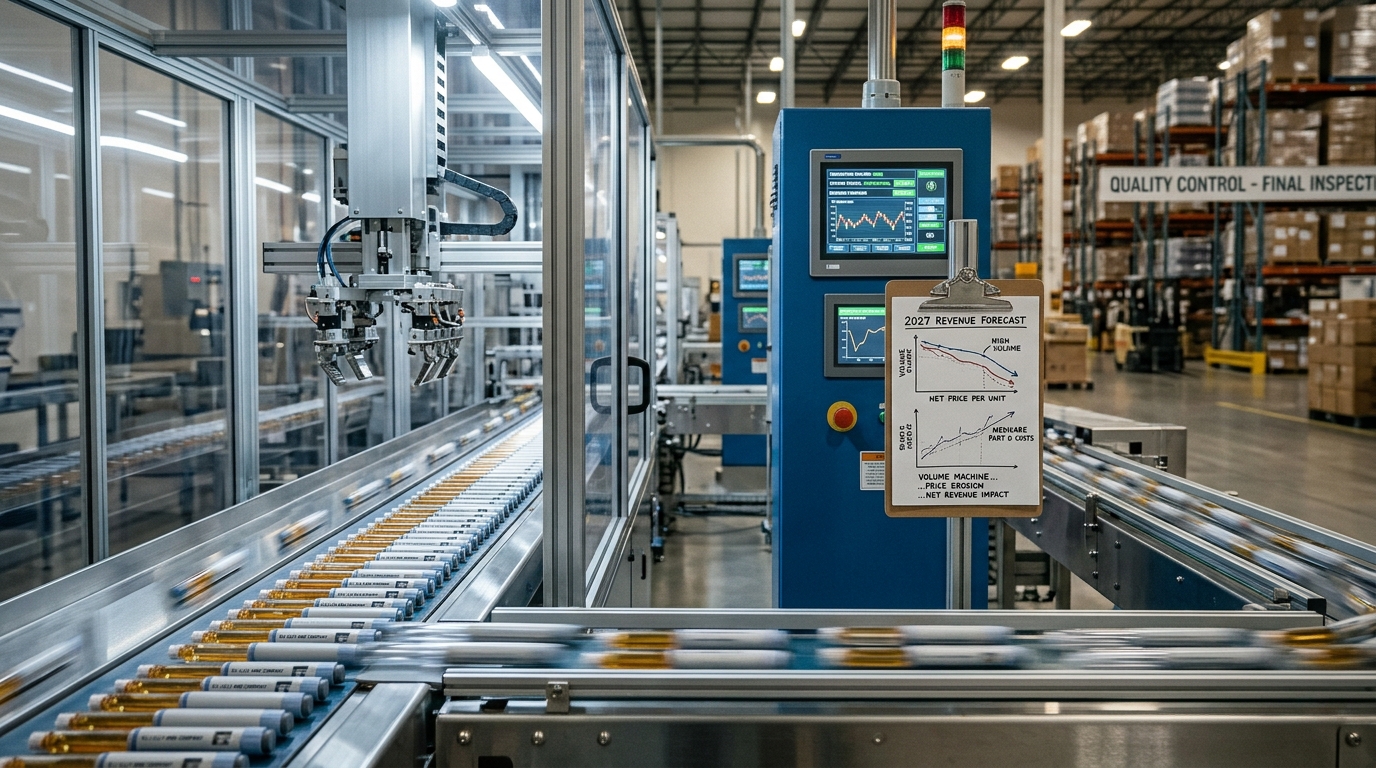
But the machinery is running cheaper by the quarter, and 2027 is when the cost of that strategy lands.
The Price Side of the Ledger
Lilly’s Q3 filing is unambiguous: worldwide revenue grew 39% because volume surged 53%, and realized prices fell 15% globally. In the U.S., the decline was 7% officially and 10% when you strip out a one-time rebate and discount estimate adjustment that made the number look tidier. Management’s own guidance calls net realized price a persistent headwind going into next year. That is not a one-quarter quirk. It is structural.
The drivers are compounding. Novo Nordisk is lowering U.S. list prices for Wegovy effective January 1, 2027. The Medicare GLP-1 Bridge program, while expanding Lilly’s patient base, directs volume into a lower net-price channel at $50 a month. Cash-pay competition already starts at $149. Each new patient Lilly adds through government or self-pay channels dilutes the per-prescription revenue it earns on that dose.
Where the Part D Surge Fits
A separate pressure is building on the payer side. A new KFF analysis released October 30 projects that the weighted average monthly premium for stand-alone Medicare Part D drug plans will rise 50%, from $34 in 2026 to $51 in 2027. CMS has said it will end the temporary Part D Premium Stabilization Demonstration after 2026, removing federal subsidies that had been holding costs down. Deductibles are rising too, with KFF projecting a weighted average Part D deductible of $643 for stand-alone enrollees in 2027.
For Lilly, this is a two-sided squeeze. Higher patient out-of-pocket costs historically suppress adherence, particularly for drugs that are elective-adjacent, like weight loss treatments. And the structural shift KFF flagged, more seniors migrating from stand-alone plans into Medicare Advantage to avoid the premium spike, accelerates the channel-mix shift that management already acknowledged as a 2027 pricing headwind.
What to Watch
The bull case for LLY rests on volume growing fast enough to outrun price. That worked in Q3. Volume was up 53% and revenue still grew 39%. The question for traders is whether that arithmetic holds as the Medicare Bridge cohort matures and cheaper oral options draw away price-sensitive patients in 2027.
At 48x earnings and an RSI near 76, LLY is priced for continued execution without much room for the volume-price gap to narrow. The stock has real catalysts ahead, but Foundayo is already FDA-approved as of April 1, 2026. The market is yet to fully price the possibility that Lilly’s growth in prescriptions is running faster than its growth in revenue per prescription. That tension is the number to watch, not the top line.