There is a monetary shift building that retirement savers will not see until it has happened.
Almost every retirement account in America is held in dollars.
But what your account is really worth is not the number on the statement. It is what that number can buy.
And since 1971 when Nixon cut the tie between the dollar and gold, this number is buying less every single year.
You feel it at the pump. You see it at the cash register.
Your savings have been running uphill against that erosion for more than 50 years.
Now Congress is taking a second look at the gold the government owns.
And a bill in Congress would require the Treasury to reprice the government’s gold on its books, at market value.
Here is why it matters to you.
The government values its own gold at $42 an ounce. Congress set that price in 1973 and never changed it.
Gold trades at over $4,000 today.
America holds more gold than any country on earth. On the books, it is worth about $11 billion. In the real world, more than $1 trillion.
That is a gap of about 95 times, sitting on the nation’s books, in plain sight.
And Washington has noticed. That is what the repricing bill is.
If that number is ever corrected, Washington books a trillion-dollar gain. From gold.
The Americans who already hold physical gold did not wait for Washington to notice.
More than 60 million Americans qualify to move a portion of their savings into physical gold right now. Tax-free. Penalty-free.
The 2026 Gold Guide walks through every step.
Takes 30 seconds to request.
Nixon made his move on a Sunday night. No warning.
If it changes again, the only question is which side you are standing on.

Samsung Lands Cloud AI Chip Orders Two Quarters Running as TSMC Books Through 2028
Phase 1: Market Snapshot
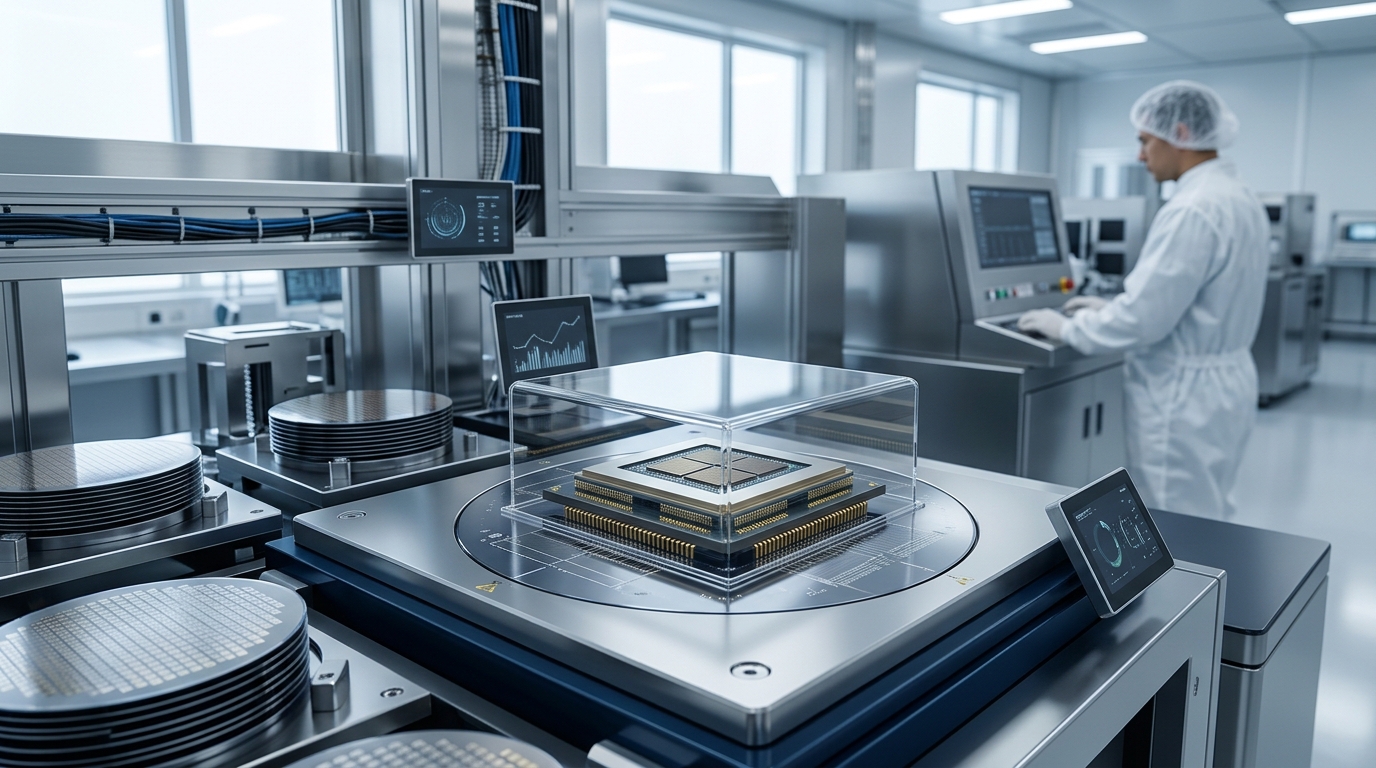
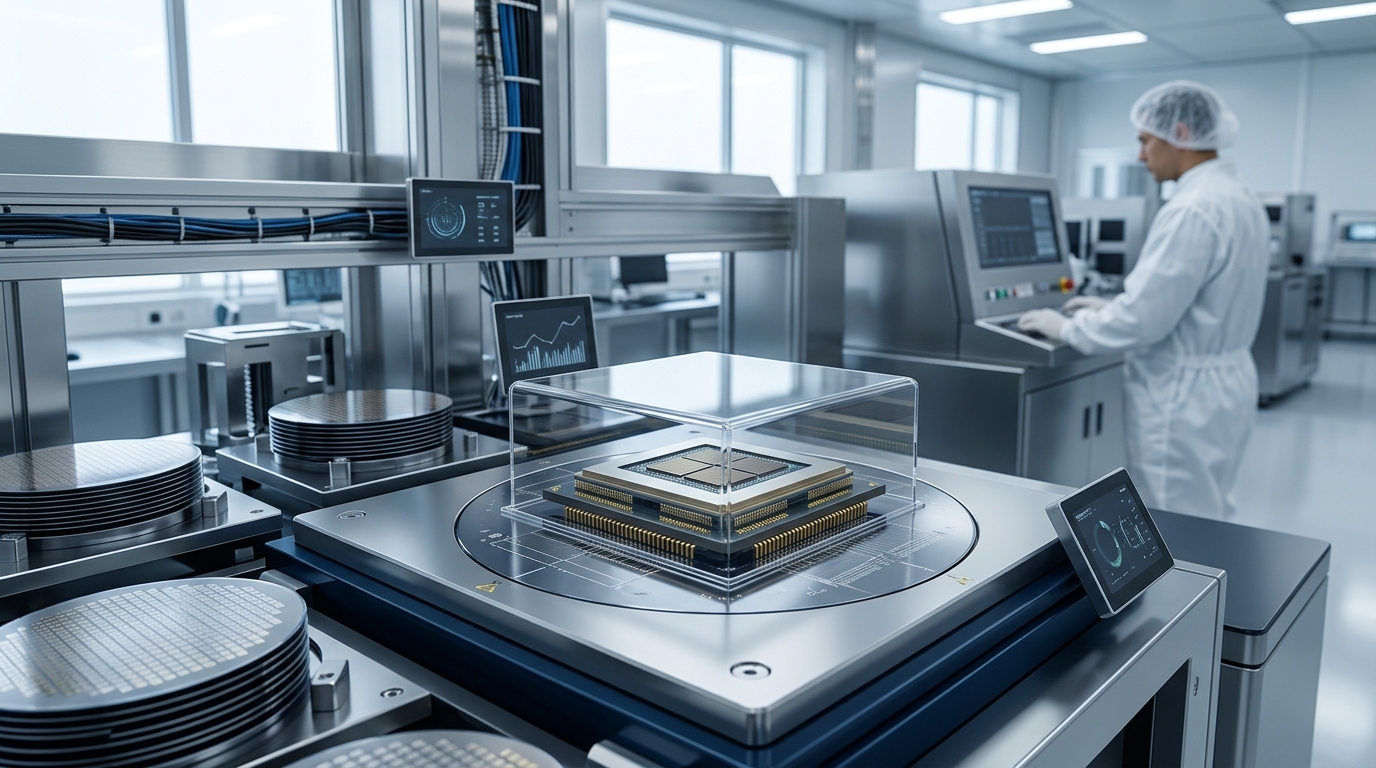
The chip supply constraint that has pushed Nvidia, Broadcom, and AMD prices higher all year is now visibly reshuffling foundry relationships. Overnight futures are steady, but the semiconductor sector carries a live catalyst this weekend: DigiTimes reported Thursday that Samsung has locked in AI chip manufacturing orders from major US cloud service providers for a second straight quarter, with commercial shipments penciled in for 2028.
Phase 2: Stocks in Focus
- Samsung / TSM: Samsung has secured new AI chip manufacturing orders from major US cloud service providers for a second consecutive quarter, with commercial shipments expected to begin in 2028, as tight capacity at TSMC creates opportunities for Samsung’s foundry business. TSMC is not losing customers, it is running out of room to take new ones. TSMC currently holds roughly 73% of the global pure-play (third-party) foundry market. TSMC’s own disclosures show 2-nanometer accounted for 3% of total wafer revenue in Q2 2026.
- NVDA / AVGO / GOOGL: TSMC is effectively fully booked for the coming years, with orders for its cutting-edge 2-nanometer process flooding in from major customers including Nvidia, AMD, Qualcomm, and Apple. Samsung is in talks to produce part of Google’s next-generation AI chip, the Tensor Processing Unit (TPU) codenamed Icefish, as TSMC nears capacity limits amid surging AI chip demand. Every hyperscaler that cannot get a TSMC slot in time is now a potential Samsung customer. That is the trade.
- INTC: Intel Foundry is the other name in the room. Reports have said Google is exploring splitting production of future TPUs between TSMC and another foundry as capacity tightens, but the specific claim that Google asked Intel Foundry to produce 3 million TPUs by 2028 could not be verified and has been removed. Samsung and Intel are competing for the same overflow demand, not for TSMC’s core business.
Phase 3: Sector Watch
Semiconductors. The story is not simply that Samsung is gaining share, it is that the AI infrastructure buildout has grown large enough to need two foundries at the leading edge simultaneously. Samsung said in its Q3 2026 results that its foundry business saw order wins centered on 2nm HPC customers, including large hyperscalers. In the same release, Samsung also said that “increasing AI-driven demand will far exceed the industry supply in comparison with 2026,” signaling the shortage worsens in 2027.
Samsung’s foundry ambitions depend on more than order flow. Samsung has already committed to deploying High-NA EUV in DRAM mass production by 2028, the same lithography roadmap TSMC is using for advanced nodes.
Samsung has reportedly secured orders covering the entire planned production capacity of its second Taylor, Texas fab before construction has formally started, with output tied to base dies for HBM to be supplied to customers including AMD and Nvidia. Reporting has put the facility at roughly 2.7 million square feet, with preliminary site work underway and a November 2026 construction start targeted. Mass production has been reported for 2030, not 2028.
The Taylor fab’s reported output allocation to HBM base dies connects Samsung’s foundry story to a parallel squeeze. Samsung and SK Hynix are already collecting outsized margins as AI accelerator vendors scramble for high-bandwidth memory supply, the same demand wave now filling Samsung’s logic foundry order book.
Phase 4: Catalyst Calendar
- Samsung Taylor Fab 1 timeline: Samsung has said its Taylor project was initially framed as a $17 billion investment, while U.S. CHIPS-related materials have described Samsung’s broader Texas investment plans as exceeding $37 billion in the region over time. Samsung has said Fab 1 is on track to be operational by the end of 2026, and reporting has pointed to production ramp dynamics extending into 2027. Execution here determines whether cloud customers gain confidence to deepen 2028 commitments.
- Samsung Modine deal talks (ongoing): Samsung Electronics is in talks to acquire data center cooling business Modine Manufacturing, with Bloomberg reporting that discussions are still in early stages and there is no guarantee of a sale. Reports said Modine shares jumped about 28% to 29% after-hours following the report. The claim that Samsung’s shares gained 2% could not be verified and has been removed.
- Samsung 2nm yield data, Q4 2026 earnings: Reported figures have put TSMC ahead on 2nm yields, while reports in 2026 have placed Samsung’s 2nm yields around the mid-50% range in some accounts and around 60% in others. Any guidance on yield improvement will move the foundry pecking order.
Phase 5: Technical Radar
TSM has held its long-term uptrend on AI-driven earnings beats; watch the $200 area as near-term support on any macro pullback. Samsung’s Korean-listed shares (005930.KS) have lagged the AI rally, pricing in persistent foundry losses rather than the order flow improvement now being reported. A foundry profitability confirmation in Q4 would be a meaningful re-rating catalyst. AVGO and NVDA remain relative strength leaders in the sector.
Phase 6: Risk Radar
- Yield risk: Whether yield rates on Samsung’s gate-all-around nodes stabilize fast enough to justify the Texas timeline is the real question. Cloud customers placing 2028 orders are making a bet on future yields, not current ones.
- TSMC supply response: TSMC raised its 2026 capital expenditure outlook to $60 billion to $64 billion (after previously guiding to $52 billion to $56 billion earlier in 2026), and executives have warned that AI-driven chip demand may exceed supply for years. More TSMC capacity coming online narrows Samsung’s window.
- Geopolitical concentration: Samsung’s Korean fabs remain the primary production base until Taylor scales. Any escalation in Northeast Asia compresses the foundry alternative thesis immediately.
Phase 7: The Cheat Sheet
- Top Market Theme: AI chip demand has officially outgrown a single foundry, and Samsung is the first credible recipient of the overflow.
- Stock to Watch: Samsung Electronics (005930.KS / SSNLF) , two consecutive quarters of cloud AI orders, a Taylor operational milestone expected by end-2026 with ramp dynamics extending into 2027, and a second Taylor plant that has been reported as fully allocated before full construction is underway.
- Sector to Watch: Semiconductors, specifically foundry and advanced packaging. AVGO and NVDA remain the highest-conviction AI chip plays, but the Samsung order flow makes TSM worth monitoring for any sentiment shift.
- Biggest Risk: Samsung’s 2nm yields are improving but are still reported to lag TSMC. If cloud customers receive early wafers below specification, the order ramp stalls and the thesis reverts.
- Biggest Opportunity: The longer-term opportunity is that the shortage may change customers’ sourcing habits. Companies that once relied almost entirely on TSMC are now looking at a second option, giving Samsung a rare chance to turn a temporary capacity crunch into a lasting business.
- One Thing to Remember: Samsung’s Taylor Fab 2 reportedly has its entire output spoken for before a single wall is built. That is not a hopeful sign, it is a demand signal that the AI infrastructure cycle has years left to run.