
The June 17 MOU already failed once. The 60-day period established under that memorandum of understanding expired in mid-August without a final agreement, following the MOU’s earlier collapse and the reinstatement of a U.S. blockade. That history is the base rate every trader should carry into Tuesday’s diplomatic news.
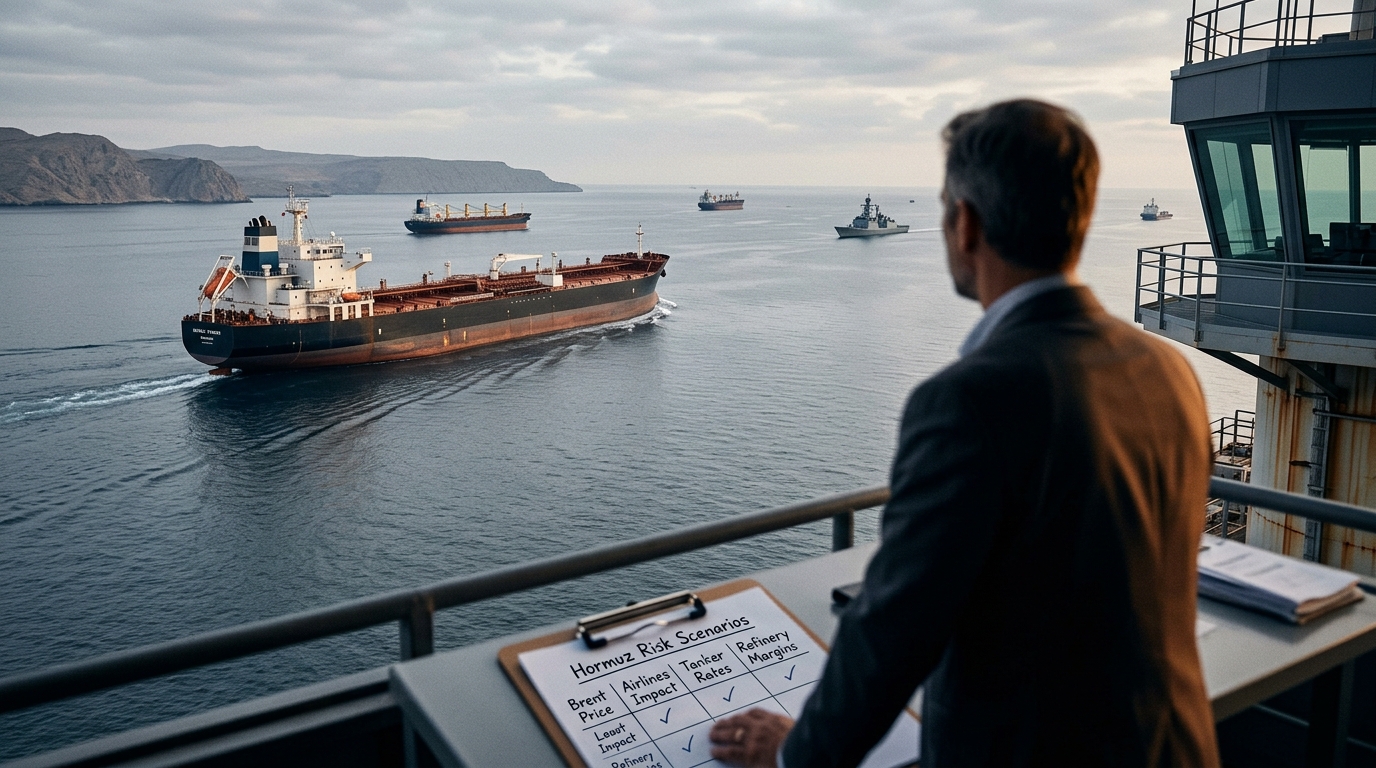
Iranian Foreign Minister Abbas Araghchi and his Omani counterpart Badr Albusaidi discussed an “interim framework” aimed at resuming shipping through the Strait of Hormuz, according to a joint statement carried by Oman’s state news agency and reported widely Tuesday. The initiative includes a “joint temporary navigational corridor” and a mine-clearance project. Technical talks will continue toward a permanent corridor, including mechanisms for traffic management and maritime security services. Structurally, this is a phased approach, not a signed deal, and the market has already started pricing the difference.
Oil sold off on Tuesday as traders leaned into de-escalation risk. But the specific levels in this draft do not line up cleanly with widely reported prices around the open, which had WTI nearer the low-$80s on Tuesday rather than the high-$70s. That puts the pair down roughly 6% over a few sessions from the highs that were tracking last week’s escalation tone.
The Payoff Table by Scenario
Partial reopening (the base case, given prior MOU failure): A corridor that restores even limited traffic benefits airlines most cleanly. United Airlines gained 2.18%, Delta added 1.25%, Southwest climbed 1.20%, and American Airlines rose about 1% at the open Tuesday, as oil fell. Jet fuel is one of the largest line items an airline carries, so a falling crude price is a direct cost relief rather than a sentiment issue. American carries the most leverage here: it has the highest debt load among the majors and has historically operated with minimal hedging, making AAL unusually sensitive to fuel price moves. That cuts both ways, but with crude falling, the coiled-spring argument for AAL gains traction.
Phased reopening (the negotiators’ stated ambition): CBA expects Brent to trade between $70 and $100 in the second half of 2026. The bank’s analysis estimates that restoring just 50% to 60% of pre-war Hormuz volumes would be enough to revive expectations of an oversupplied global market and push Brent toward that lower band. At those levels, refiners like Valero face a two-sided move: crude input costs fall, but crack spreads compress as product markets normalize. The specific claim that VLO has more than doubled year-to-date and risen 143% over the past year is not consistently supported across widely available pricing summaries, so the safer framing is that Valero has materially outperformed during the 2026 margin spike. That run was built on tight supply. A phased reopening that relieves distillate scarcity is the specific risk refiners are not priced for.
Full or durable reopening (low probability, high payoff for tankers): A new arrangement risks repeating the June deal’s failure: Tehran has sought more control over passage, including the idea of transit fees, a concept Oman has publicly pushed back on by reiterating a “toll-free” passage principle. If those conditions are bridged, VLCC operators including Frontline (FRO) face a paradox: short-term rate compression as bottlenecked tonnage clears, but a structural recovery in voyage count. The trade here is time-horizon dependent.
What Weakens the Thesis
Days after the June MOU was signed, Iran attacked a ship in Omani waters, prompting U.S. airstrikes, according to a recent Congressional Research Service timeline of the escalation. A second round of Iranian attacks on July 7 to July 8 on ships off the coast of Oman led President Trump to say the MOU was no longer in force. The pattern is clear: corridor frameworks disintegrate at the operational level. Any new incident near the mine-clearance zone resets the clock and can send Brent sharply higher, reversing every position in this trade simultaneously.
When crude prices fall, expectations for future inflation often fall with them, and those expectations can show up quickly in government bonds. Yields fell across the curve Tuesday as oil sold off and airline stocks rallied. That bond bid is not durable if the interim framework cracks. Watch the 10-year yield as the honest signal on whether institutional money believes this holds.
The highest-conviction position right now is long airlines with tightest fuel exposure, sized against Brent $89 as the level to defend. If crude closes back above that level on a framework breakdown, the trade is wrong and the exit is clear.