
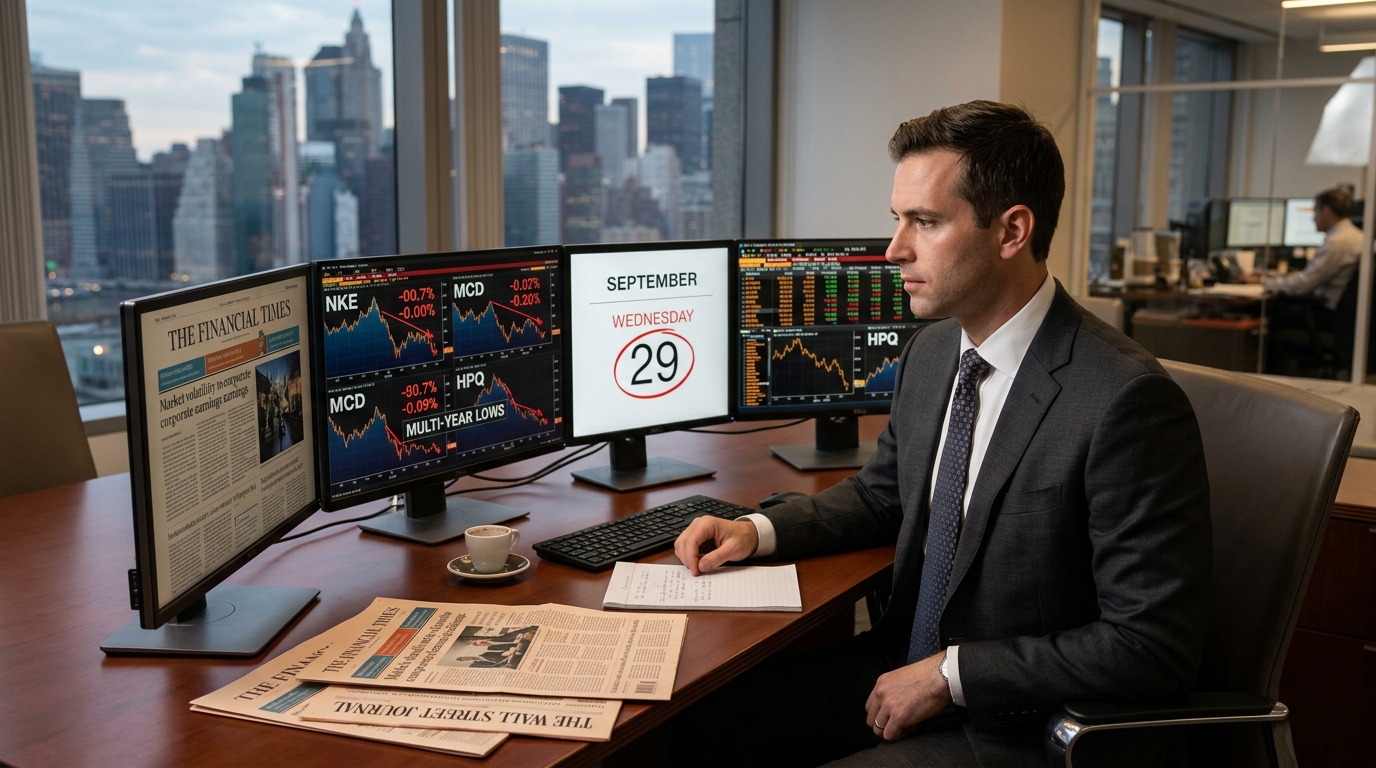
Three days. That is how long investors have before Q3 closes and the familiar twin forces of tax-loss harvesting and window dressing turn from background noise into actual order flow. The timing matters because September has delivered something unusual: extreme dispersion that has already done most of the portfolio damage without requiring a single decision from you.
At the start of September, small caps were leading for the year. By late September, that lead had narrowed, with the Russell 2000 up roughly 15% year to date. Meanwhile, the Magnificent Seven rallied to all-time highs this week, driven in part by Meta’s Muse AI agent topping App Store downloads and sending that stock about 11% higher. The rotation has been almost mechanical.
The rate environment is the engine. The 10-year Treasury yield hit 5.11%, its highest since 2007. Small caps carry the most floating-rate debt and the least pricing power when borrowing costs spike. That is not a new insight, but the magnitude of the move in September makes it an actionable one before Wednesday’s close.
The Funding Side: Triage, Not Panic
The consumer and legacy hardware names sitting at multi-year lows are where the real decision lives. They fall into two camps: structural impairment or cyclical compression. Getting that call right determines whether you harvest a loss at the bottom or lock in permanent capital destruction.
Nike is the hardest case. Since its November 2021 peak near $180, NKE has fallen roughly 78% to around $38 to $39, a level not seen in about 12 years. The bear case is blunter: JPMorgan cut its rating to Underweight, warning that the company’s “Win Now” strategic initiatives risk eroding margins and dragging on earnings. Greater China revenue fell about 11% in fiscal 2026. Nike reports fiscal Q1 2027 results on October 1, the day after the quarter closes. Holding through earnings to see whether the turnaround has a pulse is defensible. Averaging down into it without that data is not.
McDonald’s has moved faster and more recently. McDonald’s CEO told investors not to expect conditions to improve, and shares hit a fresh 52-week low of about $234, down about 20% year to date, after Kempczinski declared high inflation and flat traffic the new normal. Unlike Nike, where the structural question is brand relevance against Hoka and On, McDonald’s problem is macro: its value proposition has eroded for its core customer exactly as borrowing costs reset. That is cyclical. The franchise model still generates exceptional operating margins, and a nearly 50-year dividend streak does not evaporate in one bad year. If the thesis is a Fed pause in 2027, MCD makes sense to hold. If yields climb to 5.5%, it does not.
HP is the cleanest sell. Industry-wide personal computer unit volumes are expected to decline roughly mid-single digits in percentage terms in calendar year 2027 compared to 2026. Morgan Stanley said HP’s PC margin divergence from peers makes its re-rating increasingly difficult to justify and named it a top Underweight. HPQ had already rallied over 51% earlier in 2026 on tariff refund tailwinds, which means the loss-harvesting math is less attractive but the forward thesis is weak.
Where the Proceeds Go: Not the Magnificent Seven at Record Highs
The Magnificent Seven’s scale, cash flow, and balance sheets make it a safe haven in a rising rate environment that can punish both stocks and bonds, but buying that quality at record prices five days before quarter-end embeds all the window-dressing premium into your cost basis.
The more durable move is to let the losses crystallize now, park proceeds in short-duration instruments yielding north of 4%, and wait for the Q4 entry point. Quality compounders at fair prices beat momentum at peak prices over any horizon longer than a quarter.
The Wealth Builder Takeaway
Dispersion is not a problem to be solved. It is a calendar gift. When one part of your portfolio is at a 12-year low and another is at an all-time high in the same September, the question is not whether to act. It is whether each laggard is cheap for a reason that will resolve or cheap because the business has changed in a way that does not reverse. Nike’s answer arrives October 1. McDonald’s answer arrives when inflation does. HP’s answer is already in the filing.