
July 3, 2026
CAT at a 30-Year Valuation Peak
Burry shorted it the day it hit a record.
First a note from The Oxford Club
Dear Reader,
One unique and unknown American stock is about to make headlines.
And investors who understand this now could make big money.
There are three reasons.
First, the company is wildly profitable and deeply undervalued. It generates more cash than Hilton, Chipotle, Airbnb, or Advanced Micro Devices.
Yet its valuation is far cheaper than any of them. It’s actually 20 times cheaper than AMD.
Second, Donald Trump has publicly backed it. In a dispute with an ally who wanted to increase taxes on it, Trump warned they would be “making a big mistake.”

This could become a headline-making battle that puts this unknown company front and center.
Third, the company is at the epicenter of two industries crucial to the economy – AI and energy.
In fact, the company just signed a multi-year, multi-million dollar partnership with the hottest AI company on Wall Street.
Discover why this stock is now being called “The Next Stock Market Unicorn” Here.
Sincerely,
Ryan Fitzwater
Publisher, Monument Traders Alliance
FEATURED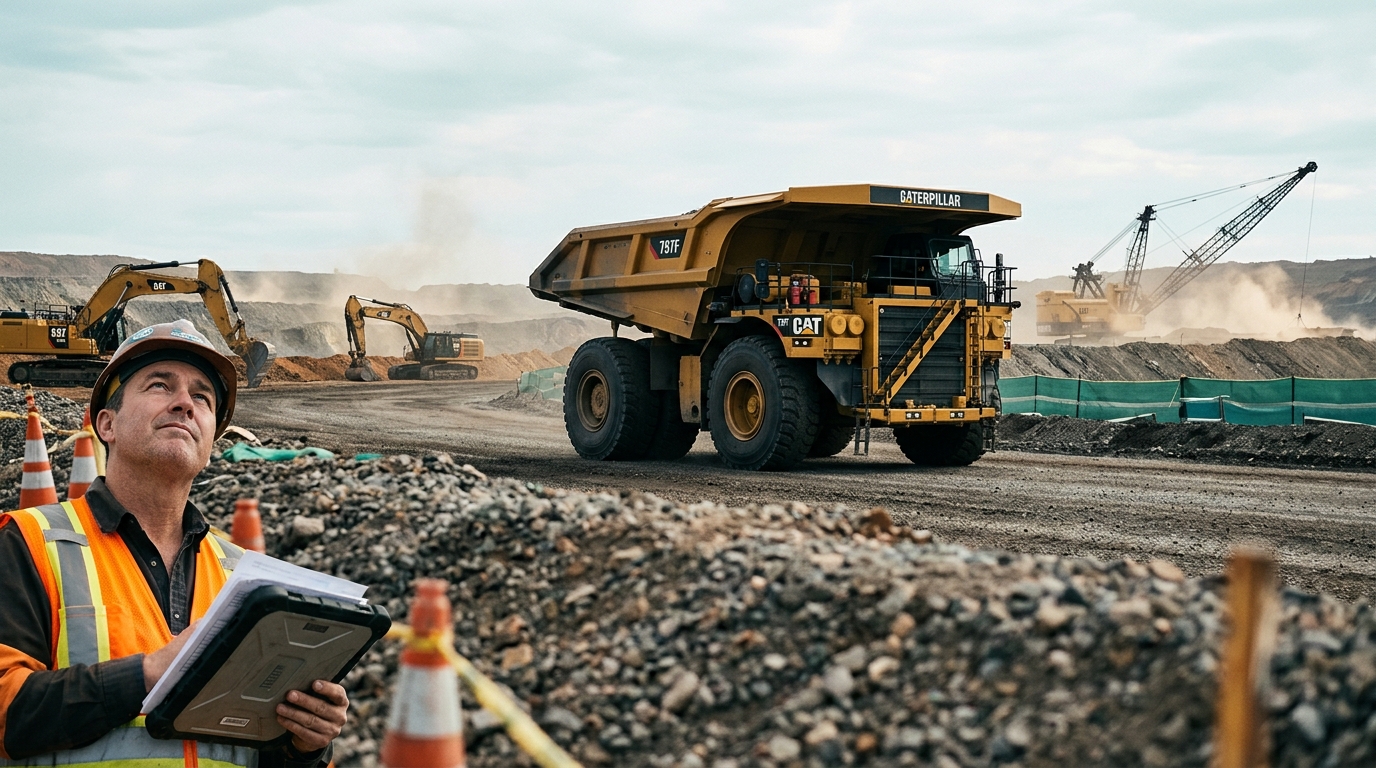
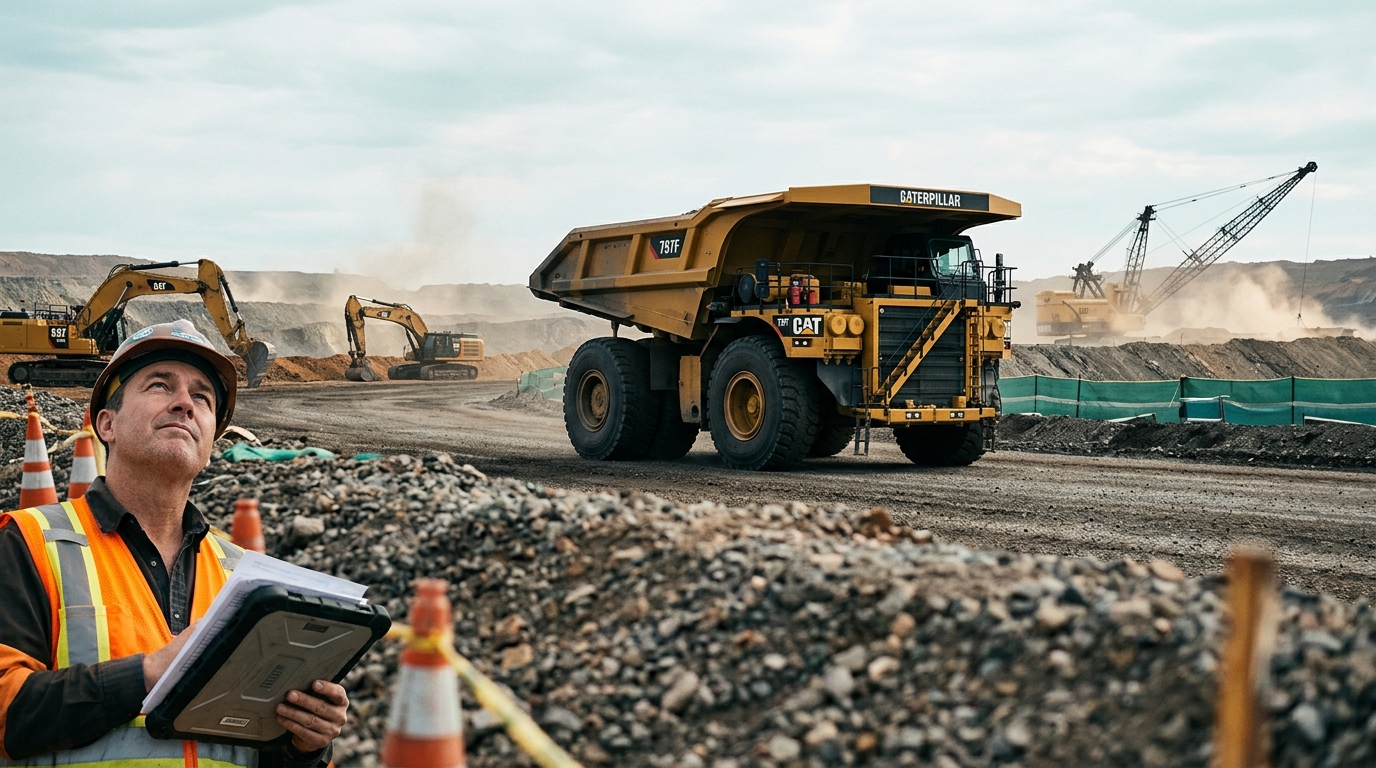
CAT at a 30-Year Valuation Peak
Most people are framing this as Burry vs. Caterpillar. That is probably the wrong frame.
What actually happened: on June 30, 2026, CAT closed at $1,064.90, an all-time high. On that same day, Michael Burry went to his Substack and disclosed he had shorted the stock at $1,060.98. Not a 13F. Not a regulatory filing. A newsletter post. Scion Asset Management deregistered as an investment adviser in late 2025, so the SEC reporting requirement is gone. The position size is unknown. We are, essentially, taking his word for it.
That context matters more than most of the coverage has acknowledged.
His actual argument is not complicated. Caterpillar is trading at roughly 53x trailing earnings. The five-year median for this stock is closer to 17x. He posted a chart of the price-to-sales ratio hitting its highest level in at least three decades, right at the record high. His read is that the market has repriced a 100-year-old machinery company as if it were a technology stock, and that kind of multiple compression tends to be fast and painful when the sentiment shifts. Hard to say that is wrong. The math is the math.
But here is where it gets more interesting.
The Ticker That Gets You In – Before the IPO.
Backed by Peter Thiel. Funded by the Pentagon.
And available to you right now – starting with just $50.
The Q1 2026 numbers do not read like a company that is coasting on hype. Revenue came in at $17.4 billion, up 22% year over year. Adjusted EPS hit $5.54, beating the Wall Street consensus of roughly $4.62 by nearly a full dollar. Management raised full-year 2026 guidance to low double-digit growth. And then there is the backlog: $63 billion at quarter-end, up 79% from a year prior. That is not a soft or lagging figure. That is contracted demand already sitting on the books, and it has almost nothing to do with excavators and construction sites. The bulk of it is power generation equipment for data centers. Engines. Turbines. Electrical infrastructure. The physical layer that keeps AI facilities running. CEO Joe Creed said on the earnings call that power generation demand from large data center customers surged 48% in sales to users, with the broader Power and Energy segment up 32% on the same metric. The company signed its sixth publicly announced framework deal of at least one gigawatt, the latest being a five-year agreement to deliver up to 2.1 gigawatts of generation assets. Creed added that additional smaller agreements exist and have not yet been made public. In response to all of it, management raised the long-term power generation sales target to more than three times 2024 levels by 2030 and announced plans to nearly triple large reciprocating engine capacity in the same window. That is not the kind of commitment a company makes if it thinks the demand is temporary.
EXPERT: “Every American Investor Could Soon Become a Millionaire”
Imagine a bull market so powerful, every single investor became a millionaire. Not by finding the next NVIDIA or Bitcoin, but by owning a simple index fund.
It sounds impossible. Yet it happened – just a short time ago. Now a legendary figure says: “Brace yourselves. It’s about to happen here, in America. But fair warning – it could be the worst thing that ever happens to you.”
This story has received little coverage in the press. But if history repeats, it could bump tens of millions of Americans into a 7-figure net worth practically overnight.
Still. A $63 billion backlog does not make a 53x multiple comfortable.
Worth noting, kind of a tangent but stay with me: CAT is now one of only two Dow components trading above $1,000 a share. The other is UnitedHealth, which is in a completely different situation right now for reasons that have nothing to do with AI or power generation. The fact that both are sitting above $1,000 is mostly a coincidence. But the 150%-plus year-over-year gain in CAT is not a coincidence. That kind of move in 12 months creates its own gravitational pull, both in terms of who gets interested and who starts looking for the exit.
The headwinds are not small. Caterpillar absorbed about $600 million in tariff costs during Q1, which was actually better than the $800 million the company had internally projected. But full-year 2026 tariff exposure is still guided at $2.2 to $2.4 billion. That does not go away quietly. The Resource Industries segment, the mining and commodities side of the business, posted a 10% operating margin in Q1, down 700 basis points year over year. That number does not get talked about much in the current coverage cycle, and it probably should.
JPMorgan is at $1,165. Truist is at $1,218. Wells Fargo at $1,155. The bulls clearly have room left in their models. The stock, as of this writing, is trading around $955 after dropping as much as 6.65% from its June 30 record in the days following Burry’s post.
Apple Price Hikes Reveal Mode’s Big Opportunity
Apple will potentially raise prices on Macs and iPads by $200 or more, another reminder that the devices we rely on keep getting more expensive.
Mode Mobile, is building the countertrend: technology that turns everyday smartphones into income-generating assets.
Its EarnOS platform has already helped users earn and save $1B+, reached 490M+ users, and powered 32,481% three-year revenue growth, earning Deloitte’s #1 fastest-growing software company ranking.
Now, Mode has secured the Nasdaq ticker $MODE, and its pre-IPO investment offering is open at $0.52/share with up to 20% bonus shares. But that window is closing fast.
Please read the offering circular at invest.modemobile.com. This is a paid advertisement for Mode Mobile’s Regulation A Offering.
August 4, 2026. That is the next earnings date. Q2 EPS estimates are sitting around $6.16, with revenue expected near $19 billion. The number to watch is Power and Energy segment margin, not just the revenue growth. If that margin holds while the segment keeps expanding, the case that Caterpillar has genuinely crossed into durable infrastructure territory stays credible. If costs from tariffs and new capacity keep eating into it, a stock trading at 30-year valuation highs is carrying more risk than the backlog alone can justify.
Burry may be early. He may be wrong. Or he may be the only one doing the math on what 53x actually requires in terms of sustained execution. August 4 will say more than any Substack post.