Most traders have never noticed the weird market anomaly that happens at 9:35 AM every morning.
They’re too busy with lagging indicators trying to predict the next move… when the market makers have already set the tone for the trading day.
It’s this weird anomaly that points us to the market maker’s key levels above and below.
And by playing the move within that range…
Regular folks like you have been able to reach for $100 or more (on a $1K stake) over 600 times in the last 2 years.
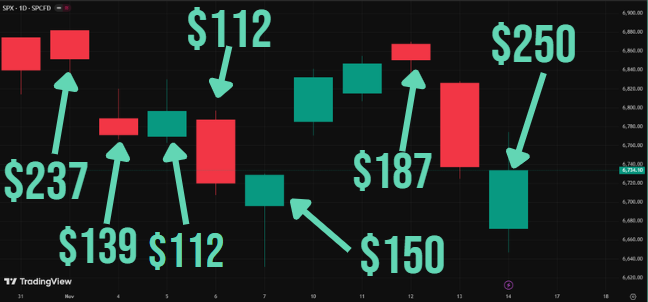
We’ve seen this straightforward approach play out whether the market broke out… broke down… or stayed choppy.
Granted, I can’t make trading guarantees here.
But I’ve opened up the data behind those trades, as well as how you can get in on the very next morning opportunity.
You’ll find the full details right here.
See you in the market.
Chris Pulver
Brent Settles at $117.64 With Nov. 4 on the Calendar
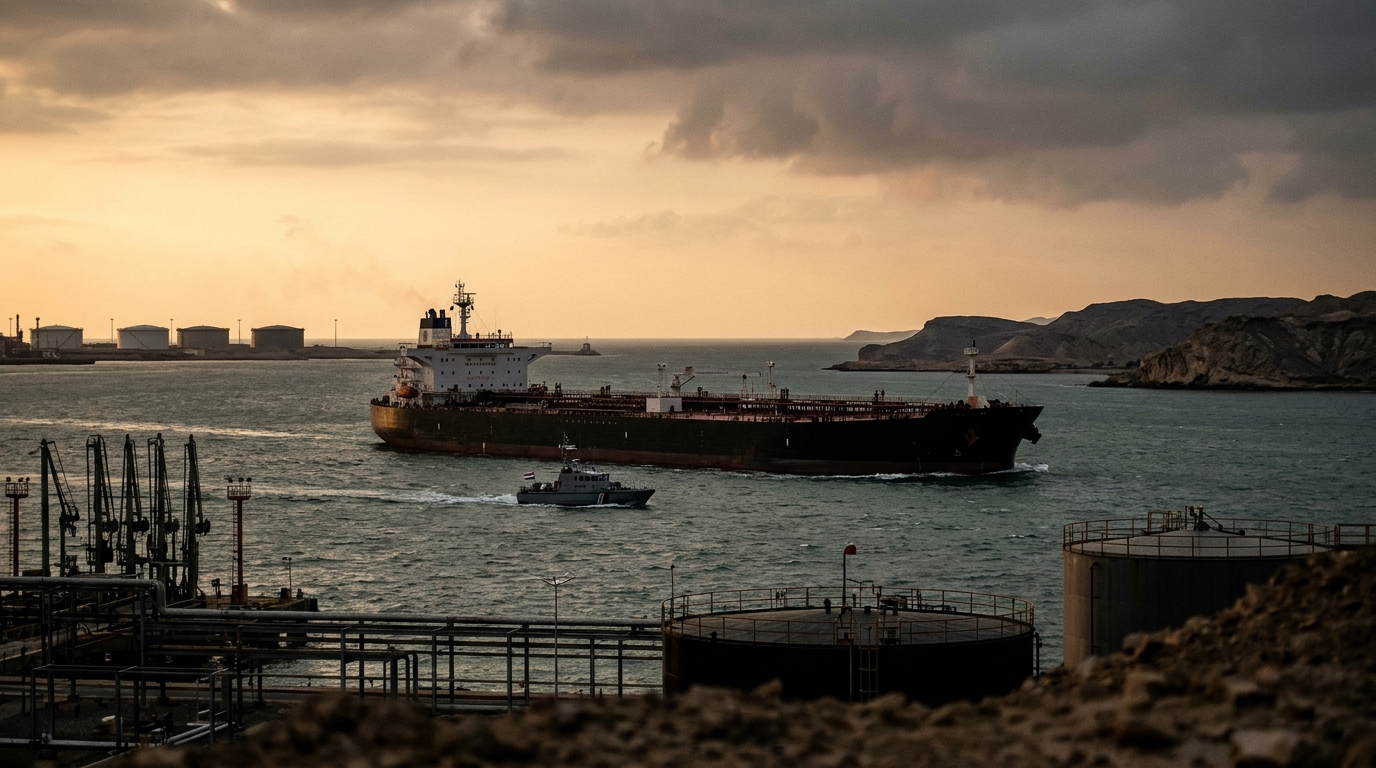
The risk that had been hanging over markets as a vague post-election possibility now has a date attached to it. President Trump is planning to resume strikes on Iran after the midterm elections, with his administration briefing Gulf allies to prepare for a short, intense round of attacks as soon as November 4, according to MS NOW, citing three senior regional officials. November 3 is election day. November 4 is the session traders need to plan for.
Oil prices ended October at six-month highs as attacks on shipping in the Strait of Hormuz intensified. Brent crude settled Friday at $117.64 a barrel, up 2.4%, after touching $118. Brent gained 13.6% in October and WTI climbed 15.2%. That is a fourth consecutive monthly gain, and the largest single-month advance since the conflict began in February.
Traders braced for a potential escalation after the US midterm elections, with an attack on a tanker in the Strait of Hormuz highlighting supply risks. It was the first known successful strike using limpet mines, explosives attached to a ship’s hull from a small boat, since the US war with Iran began in February, maritime sources said. The United Kingdom Maritime Trade Operations agency separately reported a tanker struck by an unknown projectile south of Iran’s Lavan Island.
Record Attacks, Reduced Traffic
A tally of UKMTO reports showed at least 35 attacks on shipping in the Gulf and Hormuz during October, the highest monthly count since the conflict began in February. Shipping traffic has improved but remains sharply depressed, with UKMTO recording 122 outbound and 155 inbound transits in the week through October 28, roughly 70% below pre-war levels. Ship attacks more than doubled in October compared with 15 confirmed incidents in September.
Two diplomats familiar with the matter stressed that Trump had not yet made a final decision on whether to resume the strikes. The cautious diplomatic note follows more than 12 hours of talks between Qatari mediators and Iranian officials in Tehran, aimed at averting renewed US strikes after the November 3 midterm elections. That tension between active diplomacy and military positioning is itself a market signal: until one side breaks clearly, the risk premium in crude is unlikely to compress.
Stocks in Focus: Energy Up, Airlines Down
US oil majors ExxonMobil (XOM) and Chevron (CVX) both beat analyst expectations for Q3 profits, cashing in $15.4 billion and $9.9 billion respectively. With Brent above $117, both names enter the week with strong earnings momentum at their backs. Shell (SHEL) faces the same Hormuz calculus as its US peers.
The earnings momentum is not limited to the integrated majors. ConocoPhillips, a pure-play E&P with no refining buffer, translates Brent prices more directly into earnings than XOM or CVX.
The mirror trade is in airlines. Airlines from Delta (DAL) to United (UAL) rallied on lower jet fuel assumptions when the last round of de-escalation headlines crossed. The opposite logic now applies. At $117 Brent, jet fuel costs erode any margin recovery DAL and UAL rebuilt over the summer.
The Cheat Sheet
- Top theme: Oil’s fourth consecutive monthly gain is now anchored to a specific date. If November 4 passes without strikes, expect a sharp unwind of the geopolitical premium in crude and an immediate bid in airlines.
- Stock to watch: XOM. Q3 earnings beat plus Brent above $117 going into a potential escalation is the most direct expression of this trade.
- Sector to watch: Energy. The sector enters the week with the clearest catalyst and the most direct exposure to the November 4 binary.
- Biggest risk: A strike resumption that extends beyond a short campaign. The Associated Press reported U.S. officials have warned allies to prepare both for possible renewed strikes after the election and for potential Iranian retaliation. That outcome would push Brent well above current levels and compress the broader market.
- Biggest opportunity: The de-escalation trade. Any credible diplomatic breakthrough before November 4 should compress the crude risk premium quickly and lift DAL, UAL, and other high jet-fuel-cost carriers that have been pricing in $110-plus oil indefinitely.
- One thing to remember: A date without a decision is still a catalyst. Markets will adjust aggressively in either direction the moment election results are clear and Washington signals its next move.